Wrong License Plate on Traffic Ticket? What to Do
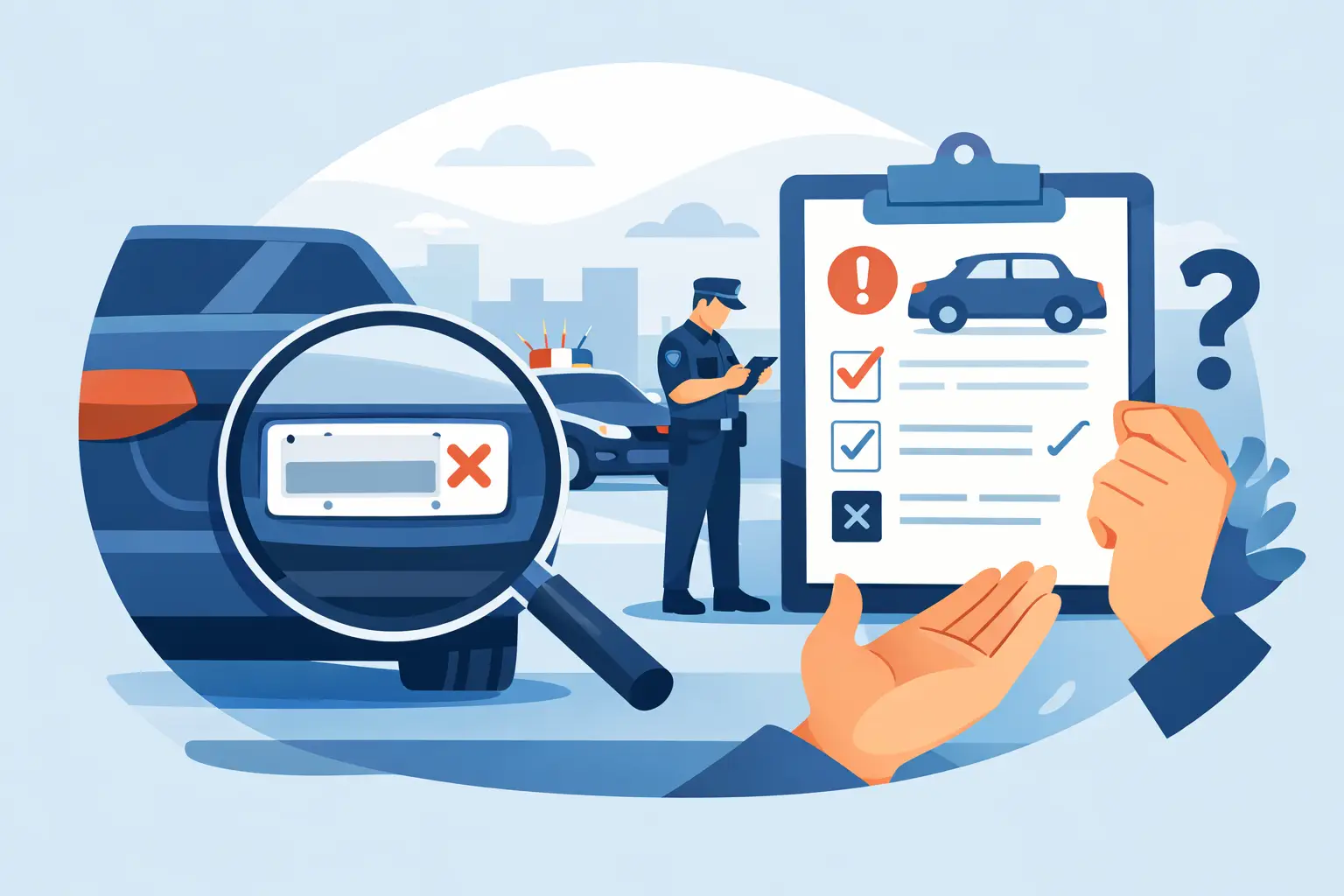
A wrong license plate on a traffic ticket is worth taking seriously, especially when the vehicle listed is not yours or the plate number does not match your registration. But a plate-number mistake does not automatically void a California citation. The practical question is whether the error is a simple clerical defect that can be corrected or a factual problem that creates real doubt about the vehicle, driver, or alleged violation.
Do not pay the ticket just because the notice arrived, and do not ignore it because the plate is wrong. Start by preserving the paperwork, checking the court deadline, and comparing every detail against your license, registration, and the vehicle involved.
When a Wrong License Plate on a Traffic Ticket Matters
A traffic citation is a charging document, not a perfect record of every event. Courts can sometimes allow minor mistakes to be corrected when the intended person, vehicle, and alleged violation are otherwise clear. A transposed digit, a missing character, or an officer writing the wrong state abbreviation may be treated as a clerical error rather than a reason to dismiss the case.
The error can matter more when it affects identification. For example, the issue may be significant if the plate on the ticket belongs to a different vehicle, the vehicle description conflicts with the plate number, or the cited vehicle cannot reasonably be connected to you. It can also become more important when the officer did not identify the driver and the ticket relies heavily on the vehicle information.
Context matters. A wrong plate number on a speeding ticket may have a different practical effect than a wrong plate on a parking citation, a red-light camera notice, or a registration-related violation. The court will look at the full record, not one field in isolation.
Check the Citation Against Your Documents
Set the ticket next to your driver license, current registration, and insurance card. Read every line, including the small print. Stress makes it easy to focus only on the fine amount and miss details that could affect how you prepare.
Confirm the plate number, state, make, model, color, year if listed, VIN digits if listed, location, date, time, code section, and officer information. Also compare the ticket's driver information with your license. A mismatch between several identifying details is usually more meaningful than one isolated typo.
Take clear photographs or scans of the citation as it was issued. Keep the envelope and any later court notice. Do not write on the original ticket, alter a photo, or assume a corrected notice means the original error no longer matters. Both versions may be relevant to understanding what changed and when.
Look for a Pattern, Not Just One Typo
One wrong character may be easy to explain. Multiple conflicts may point to a more substantial identification issue. Suppose the ticket lists a plate that belongs to a white Honda, while you drive a black Toyota, and the location or time does not fit your travel records. That is materially different from a ticket that correctly identifies your car in every way except for one reversed plate digit.
If you were stopped by an officer, think back to what happened. Did the officer look at your registration? Did they describe your vehicle correctly? Did they say they had been following your car, measuring speed, or responding to a dispatch report? Write down what you remember while it is still fresh, separating what you know from what you are unsure about.
Do Not Miss the California Court Deadline
A factual error on the citation does not pause your responsibility to respond. Your appearance date or instructions on the notice remain important unless the court tells you otherwise. Missing a deadline can create additional problems, including a possible failure-to-appear consequence.
Check the county court named on the ticket for the current status of your case. Some citations are not immediately entered into the court system, particularly shortly after issuance. If the case is not yet searchable, keep checking within a reasonable period and retain proof of your efforts.
You generally have choices such as paying, appearing, requesting a trial, or exploring other court procedures that may apply to your situation. The right choice depends on the alleged violation, your driving history, the evidence available, and the time and cost involved. A wrong plate can be one issue to raise, but it should be evaluated alongside the rest of the citation rather than treated as a guaranteed escape route.
Build a Clear Record Before You Respond
A useful preparation file is simple and factual. Include a copy of the ticket, registration, photos of your vehicle and plate, and any records that help establish where the vehicle was at the cited time. For a vehicle-identification dispute, dated repair records, toll records, work schedules, delivery logs, parking receipts, or phone location history may be relevant depending on the facts.
Avoid creating arguments that the documents do not support. If the ticket accurately lists your name, driver license number, vehicle make, and stop location, but has one incorrect plate character, claiming the officer stopped the wrong vehicle may not be credible. Focus on the actual discrepancy and why it affects reliability or identification.
If you appear in court, be prepared to explain the issue plainly: “The license plate listed on the citation does not match my registered vehicle. I have brought my registration and photographs of the plate.” Let the documents do the work. Emotional arguments about the fine or fairness of traffic enforcement usually do not resolve a factual paperwork question.
Ask Whether the Error Can Be Corrected
Courts and agencies may be able to amend certain citation details. A correction does not necessarily mean the original ticket was valid in every respect, but it does mean a typo alone may not end the matter. If an amendment is proposed, read it carefully and compare it with the original citation.
The key procedural question is whether correcting the error would unfairly prejudice your ability to understand and respond to the charge. That analysis is fact-specific. A correction to one plate digit may be viewed differently from a change that identifies an entirely different vehicle or alters a core allegation after the fact.
Evidence Questions Beyond the Plate Number
A citation review should not stop at the license plate field. For moving violations, other evidence may affect how you evaluate the case: the officer's observations, radar or LiDAR context, pacing, traffic conditions, roadway layout, weather, visibility, signage, and the precise code section cited.
For example, a speed-related ticket may involve both a vehicle-identification question and a measurement question. If the officer was monitoring multiple similar vehicles in dense traffic, an incorrect plate could be more relevant to whether the measured vehicle was correctly identified. On the other hand, if you were stopped immediately after the observation and provided your registration, the connection may be easier for the court to establish despite the typo.
This is why a document-driven review is more useful than relying on internet myths. “Wrong information means automatic dismissal” is not a reliable rule. Neither is “paperwork errors never matter.” The strength of the issue depends on the full record.
Common Mistakes to Avoid
Do not assume that paying first preserves your ability to contest the wrong information later. Payment can be treated as resolving the matter, depending on the citation and court process. Review your options before taking action.
Do not contact the officer with an accusation or attempt to fix the ticket informally without understanding the consequences. Keep communications factual and preserve copies of anything you submit. Also, do not ignore notices because the plate does not match. A court may still connect the citation to you through your name, license number, address, or other information.
Finally, do not rely on a friend’s outcome. Two tickets with the same apparent error can have very different evidence, court procedures, and factual circumstances.
Get the Ticket Reviewed Before You Decide
If the plate number is wrong, gather the original citation, registration, and any related notices before deciding whether to pay or contest the case. A California-focused ticket review can help identify whether the mismatch appears minor, whether it conflicts with other details, and what additional evidence or paperwork deserves attention.
JusticeDrive offers a free initial analysis of California traffic tickets to help drivers examine citation details, potential evidence gaps, and practical next steps before payment. It is not a law firm, does not provide legal representation, and cannot guarantee dismissal, reduced fines, or any court result.
A wrong plate entry may be only a typo, or it may be a meaningful fact that deserves a careful response. Preserve the record, meet the deadline, and make your next decision based on the complete citation - not on the assumption that one mistake automatically decides the case.