What Happens After Paying a Traffic Ticket?
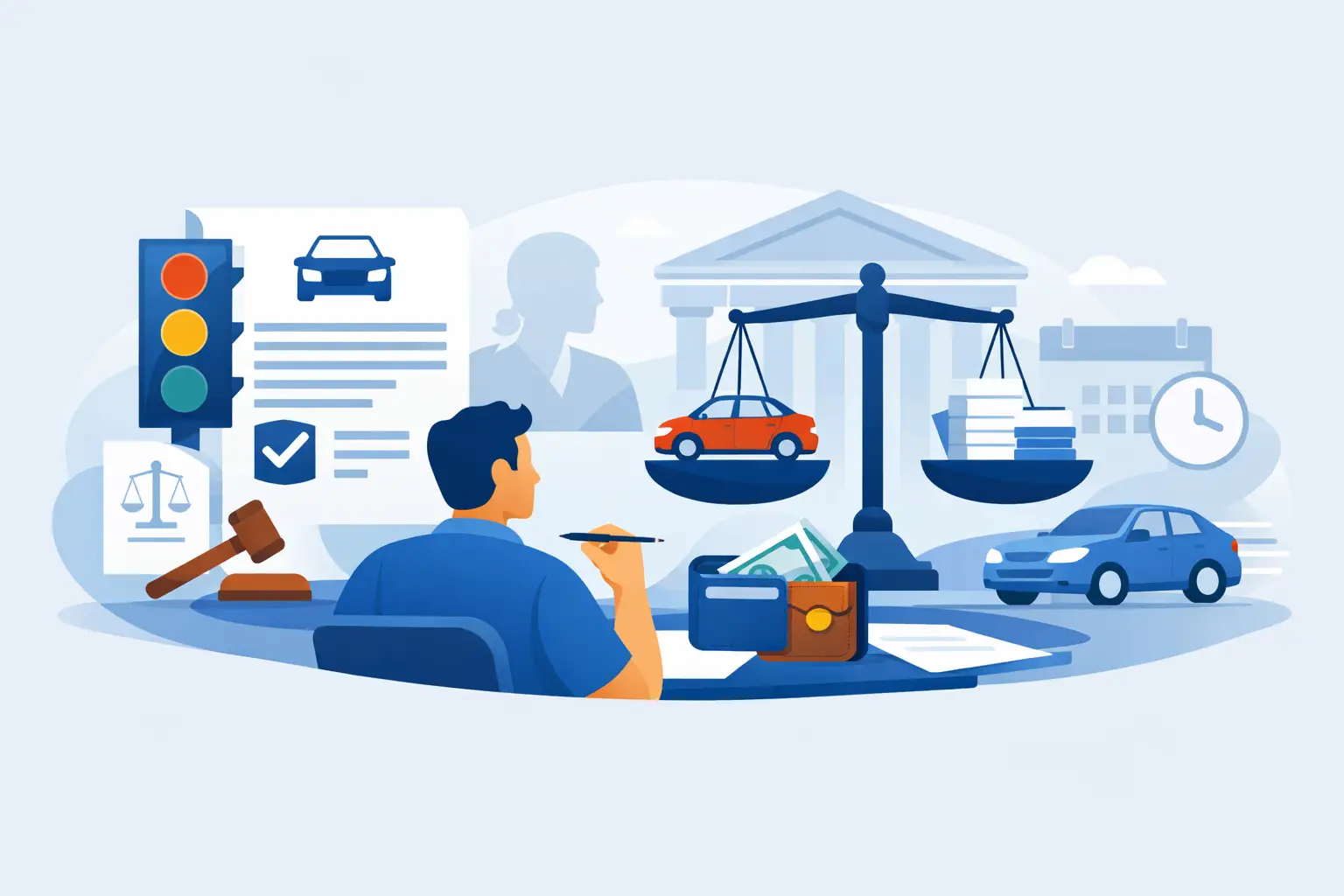
A California traffic ticket can feel finished the moment your payment confirmation appears. But what happens after paying a traffic ticket depends on the charge, the county court, your driving history, and whether you completed every item the citation required. Payment may close the court case, yet the effects can continue through DMV reporting, traffic school deadlines, insurance renewals, and your driving record.
For many drivers, paying is treated as a decision not to contest the citation. That can be practical when the facts are clear and the cost of fighting the ticket outweighs the potential benefit. It also means you should understand what the payment resolves - and what it does not - before assuming the matter is over.
What Happens After Paying a Traffic Ticket in California
For a typical California infraction, the court applies your payment to the amount due and records a disposition in the case. If you were not required to appear and there are no remaining conditions, the court case is generally closed. Keep the payment receipt, case number, and confirmation date. Court systems can take time to update, and those records are useful if a notice, collection letter, or DMV issue appears later.
Payment often operates as a forfeiture of bail or an acceptance of responsibility for the violation, depending on the court process and citation. In practical terms, it usually ends your opportunity to simply ask for a trial on that ticket. Reopening a resolved matter can be difficult and may require a specific legal basis, a timely filing, and court approval.
A payment also does not automatically fix every problem connected to a citation. A correctable equipment violation may require proof of correction. A license, registration, or insurance issue may require documents. A ticket involving a mandatory appearance, a misdemeanor allegation, or a commercial driver license can follow a different path from an ordinary moving infraction.
The Court May Send the Result to the DMV
After the court enters the result, it may report the matter to the California Department of Motor Vehicles. The timing varies. Do not assume the DMV record will update the same day you pay, or that no DMV action will occur because the court case is closed.
For many moving violations, the result can affect your driving record and may carry a point under California's negligent operator treatment system. The point value and consequence depend on the offense. A basic moving violation may be treated differently from violations involving excessive speed, a collision, alcohol or drugs, a suspended license, or commercial driving.
Accumulating points can lead to DMV action if your record reaches certain thresholds within defined time periods. The DMV process is separate from the court's handling of the ticket. Closing the court case does not necessarily prevent the DMV from reviewing your record or taking action permitted by law.
Parking tickets are different
A parking citation is usually handled through an administrative process rather than as a moving violation in traffic court. Paying it generally resolves the parking penalty, but unpaid parking tickets can create registration problems or added penalties. Because parking citations typically do not involve a moving violation, they are not handled the same way as a speeding, stop-sign, or unsafe-lane-change citation.
Correctable violations can require one more step
For a fix-it ticket, payment alone may not be enough. The court may require a law enforcement officer, authorized inspection station, or other qualified person to sign off on the correction. You may also owe an administrative fee. Missing that proof-of-correction deadline can leave the case unresolved even if you addressed the underlying equipment problem.
Traffic School: Payment Does Not Always Mean You Are Done
If the court finds you eligible and you elect traffic school, you typically pay the fine plus any traffic school administrative fee, then complete an approved course by the court's deadline. The court usually provides instructions about eligibility, enrollment, and completion reporting.
Traffic school can be valuable for an eligible driver, but it is not a universal solution. Eligibility can depend on the violation, your license type, your prior traffic school use, and other case facts. Certain serious violations and some commercial-driver situations may not qualify. Courts also impose deadlines, and waiting until the last week can create avoidable problems if the provider does not report completion promptly.
Completing traffic school may limit how the conviction is displayed or treated for certain purposes, but it is not a promise that an insurer will ignore the incident or that every record will look the same. Ask the court or review its instructions for the rules that apply to your specific case.
Your Insurance May Change, but Not Immediately
Many drivers pay a ticket expecting an instant insurance increase. That is not always how it works. An insurer may learn of a moving violation at renewal, when it runs a motor vehicle record, or during another policy review. Whether your premium changes depends on the insurer's underwriting rules, the type of violation, your prior record, accident history, coverage, and available discounts.
One minor violation does not guarantee a rate increase. On the other hand, a citation can have a larger financial effect for a driver with prior points, a new driver, a rideshare driver, or someone already paying higher rates. The fine printed on the ticket is only one possible cost.
Commercial and professional drivers should be especially careful. A citation may have employment, reporting, or licensing implications beyond a personal auto policy. A payment that seems like the fastest way to clear a deadline can still affect a driver whose work depends on a clean record.
Check for Notices After You Pay
Most paid tickets do not require further action, but it is smart to watch for mail, email, or online case updates after payment. Court notices may identify an uncompleted traffic school requirement, missing proof of correction, a balance caused by a payment-plan issue, or a required appearance you overlooked.
Use this short post-payment check:
- Save the payment confirmation and a copy of the citation.
- Confirm the court case shows paid, closed, or otherwise resolved.
- Complete traffic school or proof-of-correction requirements before the deadline.
- Check your DMV record later if the violation could affect your license or work.
If your payment was made close to a deadline, keep especially close records. Online processing delays, third-party payment services, and county-system updates can make a timely payment look incomplete for a short period. Your receipt is your best first document if you need to clarify the status.
Before You Pay, Review What You May Be Giving Up
The most useful time to examine a citation is usually before payment. Once you pay, you may be giving up the straightforward path to challenge the officer's observations, the accuracy of speed-measurement evidence, identification issues, roadway conditions, weather context, or court paperwork problems.
That does not mean every ticket should be fought. Sometimes the evidence is strong, the driver is eligible for traffic school, and payment is the sensible choice. But a citation is more than a fine amount. The face of the ticket, the alleged code section, officer notes, radar or LiDAR context, location details, deadlines, and court instructions can all affect the decision.
If your deadline has not passed, JusticeDrive can provide a free, California-specific initial review of your uploaded citation to help identify possible factual, evidentiary, procedural, or paperwork issues before you decide how to proceed. JusticeDrive is not a law firm, does not provide legal representation, and cannot guarantee dismissal, reduced fines, or any court outcome.
Paying a ticket can be the right call, but it should be an informed one. Save your records, finish every court requirement, and give yourself enough time to understand the citation before a payment turns a question mark into a closed case.