Traffic Ticket Evidence That May Change Your Next Step
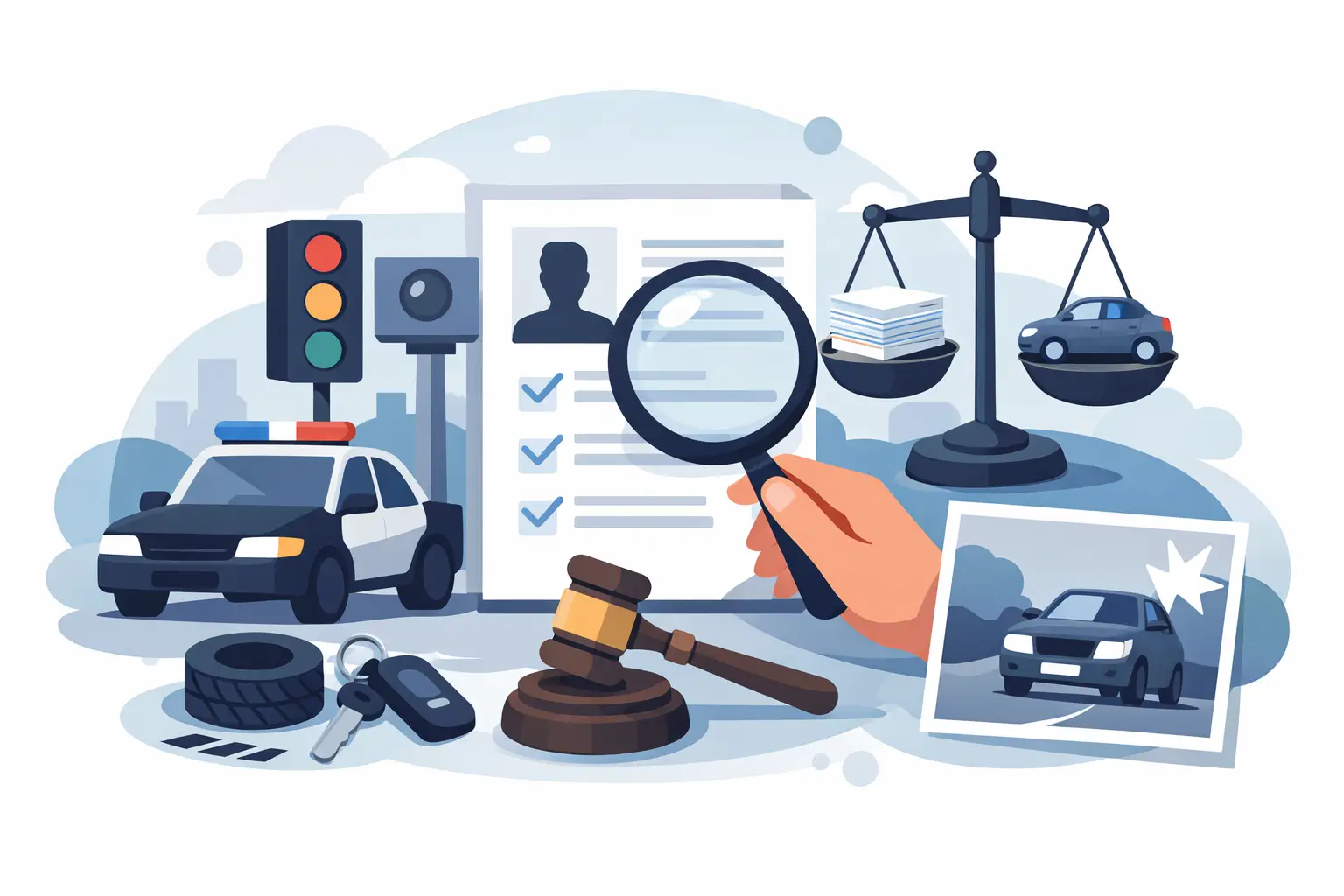
A traffic ticket is not the full story of what happened on the road. It is a short record of an officer's allegation, often written quickly at the roadside. The traffic ticket evidence behind that allegation - the officer's observations, a speed measurement, roadway conditions, identification details, and court records - can shape whether paying immediately is the right choice.
For California drivers, the first practical move is to preserve what you can while the details are still available. That does not mean every citation has a winning defense. It means a ticket should be reviewed on its actual facts before you accept the fine, possible insurance consequences, traffic school decision, or court deadline.
Start With What the Citation Actually Says
Read every field on the ticket, including the vehicle information, location, date and time, alleged code section, speed listed, officer notes, and appearance instructions. Small details do not automatically invalidate a citation, but they can matter when they affect the accuracy, clarity, or proof of the allegation.
For example, a location should be specific enough to connect the alleged violation to a real roadway and set of conditions. If you were cited for speed, compare the written location with where you remember being stopped. Was it on the same street, near the same cross street, and in the same direction of travel? If a lane, direction, vehicle description, or plate number appears incorrect, save a clear copy and write down what you remember.
A clerical error alone is not usually a dismissal button. Courts may allow some errors to be corrected, particularly when the mistake does not create real confusion about the allegation. But a pattern of discrepancies can be more meaningful than one typo. The question is whether the paperwork and other evidence can reliably establish what occurred and who allegedly committed the violation.
What Traffic Ticket Evidence Can Include
The evidence available in a traffic matter depends on the charge. An officer's testimony can be evidence, even when there is no dashboard video, body-camera recording, or civilian witness. A driver should not assume that a lack of a photograph means the citation cannot be proven.
At the same time, an officer's conclusion is not the only relevant record. Depending on the circumstances, traffic ticket evidence may include the citation itself, officer notes, video, dispatch records, witness accounts, photographs, physical road features, and speed-measurement information. Your own contemporaneous notes, photos, and documents can also help you assess the situation and prepare questions.
For a speeding allegation, the key issue may be how speed was determined. Was the officer pacing your vehicle, using radar or LiDAR, visually estimating speed, or relying on another method? Each approach has context that can affect reliability. Traffic density, intervening vehicles, distance, angle, weather, visibility, and the officer's location may all be relevant.
If radar or LiDAR was involved, calibration, testing, training, and use conditions may be worth reviewing where applicable. This does not mean a driver can simply demand a document and expect the case to disappear. It does mean the claimed measurement should be considered alongside the conditions under which it was obtained.
Road and Weather Conditions Matter, but Not Always the Same Way
Road conditions can cut in more than one direction. Rain, glare, fog, construction, a downhill grade, merging traffic, or obstructed sight lines may affect an officer's ability to observe a vehicle or obtain a clean speed reading. Those same conditions can also support an argument that a driver should have traveled more cautiously.
That trade-off is why details matter. A wet roadway is not automatically helpful to a speeding defense. But if the alleged observation depended on clear visibility across multiple lanes, heavy rain or reflective glare may be worth documenting. Take photographs only when it is safe to do so, and label them with the location and date. If conditions have changed since the stop, note that too.
Preserve Your Version Before It Fades
Memory becomes less reliable with every passing week. Write down a factual account as soon as possible: where you entered the road, your lane, your approximate speed, surrounding traffic, weather, visibility, signs you saw, the officer's position, and what was said during the stop. Keep the tone neutral. A timeline is more useful than a frustrated narrative.
If a passenger was present, ask them to write their own account without coaching them. If there are photos, receipts, delivery logs, work schedules, navigation history, or vehicle records that establish timing or location, save copies. For rideshare and delivery drivers, app records may help reconstruct a route, but they should be treated as supporting context rather than a substitute for direct evidence.
Do not alter screenshots, edit photos in a misleading way, or contact witnesses with pressure to change their account. Credibility matters. Organized, accurate records are more useful than a large folder of unrelated material.
Look at the Officer's Procedure in Context
A citation may raise practical questions about the stop and the observation process. How long did the officer observe the vehicle? Was there a clear view? Did the officer identify the right vehicle in a group of similar cars? Was the alleged conduct continuous, or did traffic conditions change before the stop?
These questions are especially relevant when the allegation relies on a brief visual observation. For an unsafe lane change or red-light allegation, for instance, the surrounding traffic pattern, sight line, intersection layout, and timing can matter as much as the words printed on the citation.
Procedure is not a collection of technical traps. Some concerns may have little effect on the outcome; others may reveal a genuine gap between an allegation and what can be reliably shown. Focus on the facts that connect directly to the charged violation instead of assuming every imperfect interaction creates a defense.
Check Court Paperwork and Deadlines Early
The court information on a California ticket deserves the same attention as the allegation itself. Confirm the court named, the due date, the options stated, and whether you have received any later notice. Missing a deadline can create separate problems, even if you believe the ticket is mistaken.
Before choosing an option, understand the practical difference between paying, requesting traffic school if eligible, appearing in court, and considering a written process where available. Eligibility and procedures can depend on the charge, your driving history, the court, and other facts. A decision that makes sense for a first-time minor violation may not make sense for a driver whose job, insurance, or license status is already under pressure.
Keep copies of every document you submit or receive. If you speak with court staff, record the date, time, and general information provided. Court staff can explain process, but they do not provide legal strategy or representation.
Turn the Review Into a Decision
A useful review should end with a decision point, not just a list of possible issues. Ask whether the available facts identify a concrete factual dispute, an evidence question, a roadway or weather factor, a speed-measurement concern, or a paperwork issue worth pursuing. Then weigh that against the time, deadline, potential fine, insurance exposure, and risk tolerance involved.
JusticeDrive provides a California-focused initial citation review built around those document and evidence categories, before you decide whether to pay or take another step. It is not a law firm, does not provide legal representation, and cannot promise a dismissal, reduced fine, or any particular court result.
If you decide to contest a ticket, prepare around the specific allegation. Bring or organize only materials that help explain the location, timeline, conditions, measurement context, or identification issue. Broad claims that a ticket is unfair rarely carry the same weight as a clear, fact-supported question about what happened.
A citation can feel like a deadline designed to make you pay quickly. Give yourself enough time to read it closely, preserve the facts, and understand the choices in front of you. The most useful next step is often not an immediate answer - it is a well-organized record that lets you make one.