Traffic Ticket Defenses to Check Before You Pay
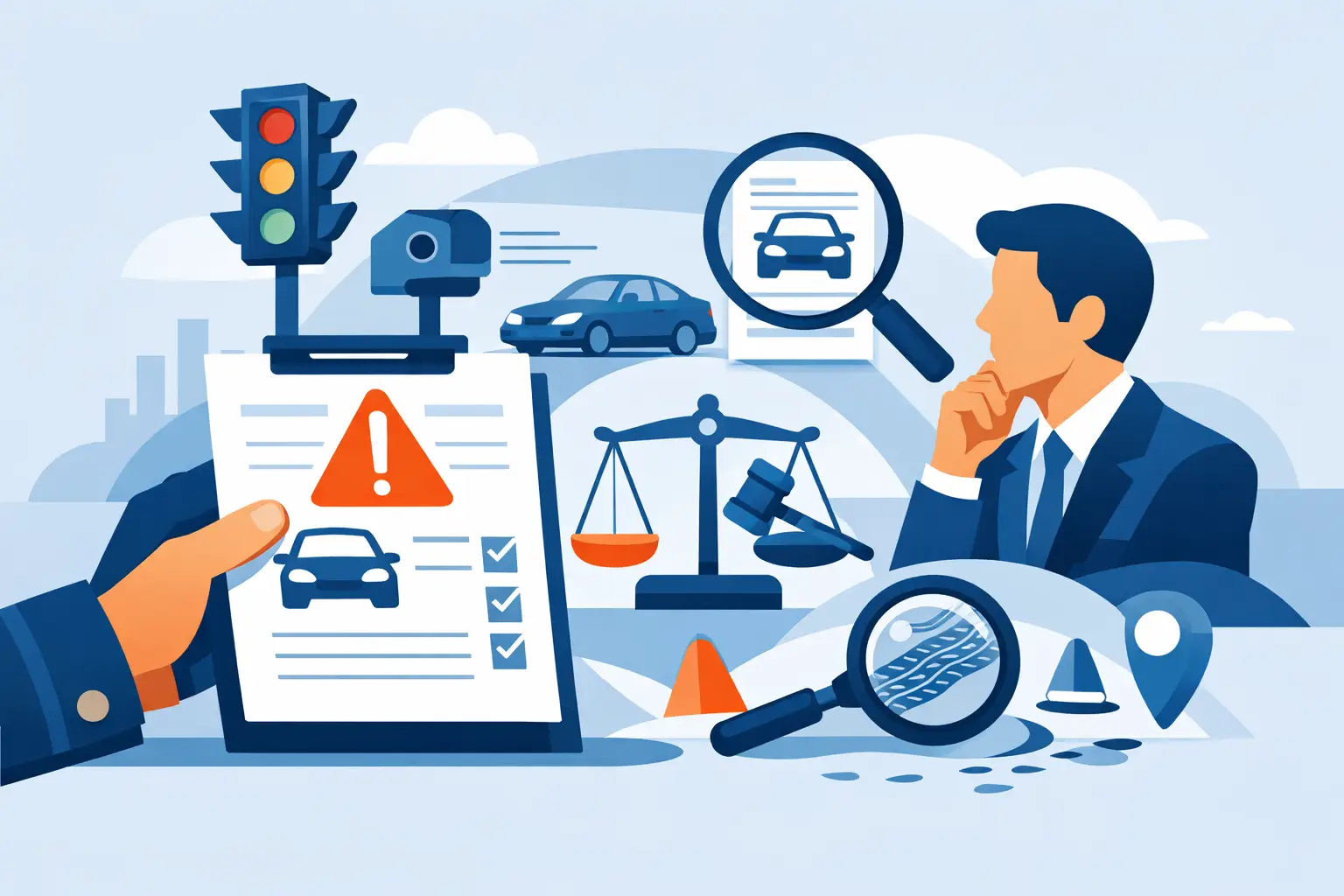
A California traffic ticket can feel like a bill with only one obvious answer: pay it and move on. But traffic ticket defenses may exist when the citation, the underlying evidence, the roadside conditions, or the court paperwork do not fully support what was alleged. The point is not to assume every ticket will be dismissed. It is to examine the specific record before a payment decision closes off options.
For many drivers, the cost is larger than the fine. A conviction can affect insurance, driving history, work that depends on a clean record, or the time required to handle a court appearance. A careful review gives you a clearer basis for deciding whether to pay, request a court date, pursue a traffic-school option if available, or prepare a defense.
Start With the Citation Itself
A citation is a record of an officer's allegation, not a complete account of the incident. Read every field rather than focusing only on the fine amount and violation code. Confirm your name, driver's license information, vehicle description, plate number, location, date, time, and the statute or code section listed.
A clerical error alone does not automatically erase a ticket. Courts can sometimes permit corrections when the intended person, vehicle, and alleged conduct are still clear. Still, a mistake can matter when it creates real uncertainty about the event, vehicle, location, or charge. It can also point to a larger documentation issue worth examining.
The violation code matters because each charge has its own elements. A speeding allegation is different from an unsafe lane change, a stop-sign violation, an equipment violation, or a failure-to-yield citation. The facts needed to support one may not support another. Before building any response, make sure you understand exactly what you were cited for.
Evidence-Based Traffic Ticket Defenses
The most useful defenses are tied to evidence, not just disagreement. “I do not think I was speeding” may be true, but it is stronger when paired with details that test the reliability or completeness of the allegation.
Speed Measurement and Observation
For a radar or LiDAR-based speeding ticket, relevant questions can include how the speed was measured, whether the officer had a clear target, the stated distance and angle, surrounding traffic, and whether conditions could have affected the reading. Radar may capture the strongest or most reflective return in a group of vehicles. LiDAR is generally more targeted, but aiming, identification, and line-of-sight facts can still matter.
The goal is not to make a blanket claim that speed-measurement equipment is unreliable. These tools are commonly accepted, and a generalized challenge may not go far. Instead, focus on the context of the particular stop: Was traffic dense? Were there large vehicles nearby? Was the officer positioned around a curve or overpass? Does the citation or officer's account identify the vehicle and method clearly?
An officer's visual estimate can also be part of the evidence. That does not make it invalid, but it makes the observation conditions relevant. Lighting, distance, traffic flow, obstructed views, and the time available to observe can all affect what can be reliably identified.
Road, Weather, and Visibility Conditions
Environmental facts can cut in more than one direction. Rain, fog, glare, construction, road debris, or poor visibility may explain why an officer's observation was difficult. But those same conditions can also support an allegation that a driver failed to use reasonable care or drove too fast for conditions. Context matters.
Record conditions as soon as you can. Note the weather, traffic volume, road layout, lane markings, signage, nearby intersections, construction zones, and any visual obstructions. If a sign was hidden by vegetation, missing, placed after a turn, or difficult to see at the relevant time of day, that may be more useful than a broad statement that the sign was unfair.
For a stop-sign, red-light, lane, or turn-related citation, road evidence can be central. Photos taken safely and lawfully can preserve sightlines, sign placement, faded markings, or changes to the area. Take them from a position that reflects a driver's approach, not just from directly beside the sign.
Facts That Do Not Match the Charge
Some defenses begin with a simple mismatch. The cited code may describe conduct different from what occurred, or the officer's narrative may not establish each required fact. For example, an alleged unsafe movement may raise questions about lane markings, traffic conditions, the vehicle's actual path, or whether another driver's actions created the situation.
This is why a factual timeline helps. Write down what happened in order while your memory is fresh: where you were coming from, the route, traffic, weather, what the officer said, and what documents were provided. Avoid filling gaps with guesses. A clean, specific timeline is more useful than an emotional account.
Procedure and Paperwork Can Matter
Not every issue is about what happened on the road. Citation and court documents may reveal problems involving dates, locations, deadlines, notices, or the way the charge is described. These issues do not always result in dismissal, but they can affect how you prepare and what questions you ask.
Check the appearance date, court location, citation number, and instructions against any notice you later receive. Do not ignore a deadline because you believe the ticket has an error. Missing a required response can create additional consequences, including a failure-to-appear matter or a hold affecting your driving privileges.
Officer procedure may also be relevant, depending on the allegation. Useful details can include the reason for the stop, statements made at the roadside, whether the officer identified a measurement method, and whether the citation notes equipment or observation information. Procedure is not a shortcut to a dismissal. A claimed procedural problem must be connected to the facts and legal requirements of the case.
Preserve Information Before It Disappears
Evidence is easier to review when it is organized early. Save the original ticket and take clear photos of both sides. Keep court notices, proof of correction for fix-it matters, registration or insurance records when relevant, and any photos or videos that accurately show the scene.
If another person was present, ask them to write down what they saw independently. A passenger's memory can be useful, but it is more credible when it is specific and not shaped by a group effort to reconstruct the event later. For business or delivery drivers, preserve dispatch records, route logs, or time-stamped work information only when they directly relate to the citation.
Do not alter images, recreate documents, or rely on evidence that does not fairly represent conditions at the time. A defense should improve clarity, not create new credibility problems.
Decide What Outcome You Are Pursuing
A ticket review should lead to a practical decision, not just a list of possible arguments. Sometimes the evidence suggests a driver should contest the citation. In other cases, the issue may be correctable, traffic school may be the more efficient option if permitted, or paying may make sense after weighing time, cost, and potential consequences.
Your driving record, the alleged violation, the county court process, and whether you drive for work can all change that calculation. A minor citation may carry greater consequences for a rideshare driver than for someone who rarely drives. Conversely, taking time off to fight a low-impact ticket may not be practical for every person.
JusticeDrive can provide a free initial, document-driven review of a California traffic citation before you decide how to proceed. The review can flag potential evidence gaps, measurement context, road and weather factors, procedural signals, and paperwork issues. It is not a law firm, does not provide legal representation, and cannot guarantee dismissal, reduced fines, or any court result.
The best next move is usually the one based on the actual ticket and available evidence, not the pressure of the payment deadline. Keep the deadline in view, preserve the facts, and make your decision with a complete picture of what the citation does - and does not - show.