Traffic Lawyer Versus Ticket Preparation
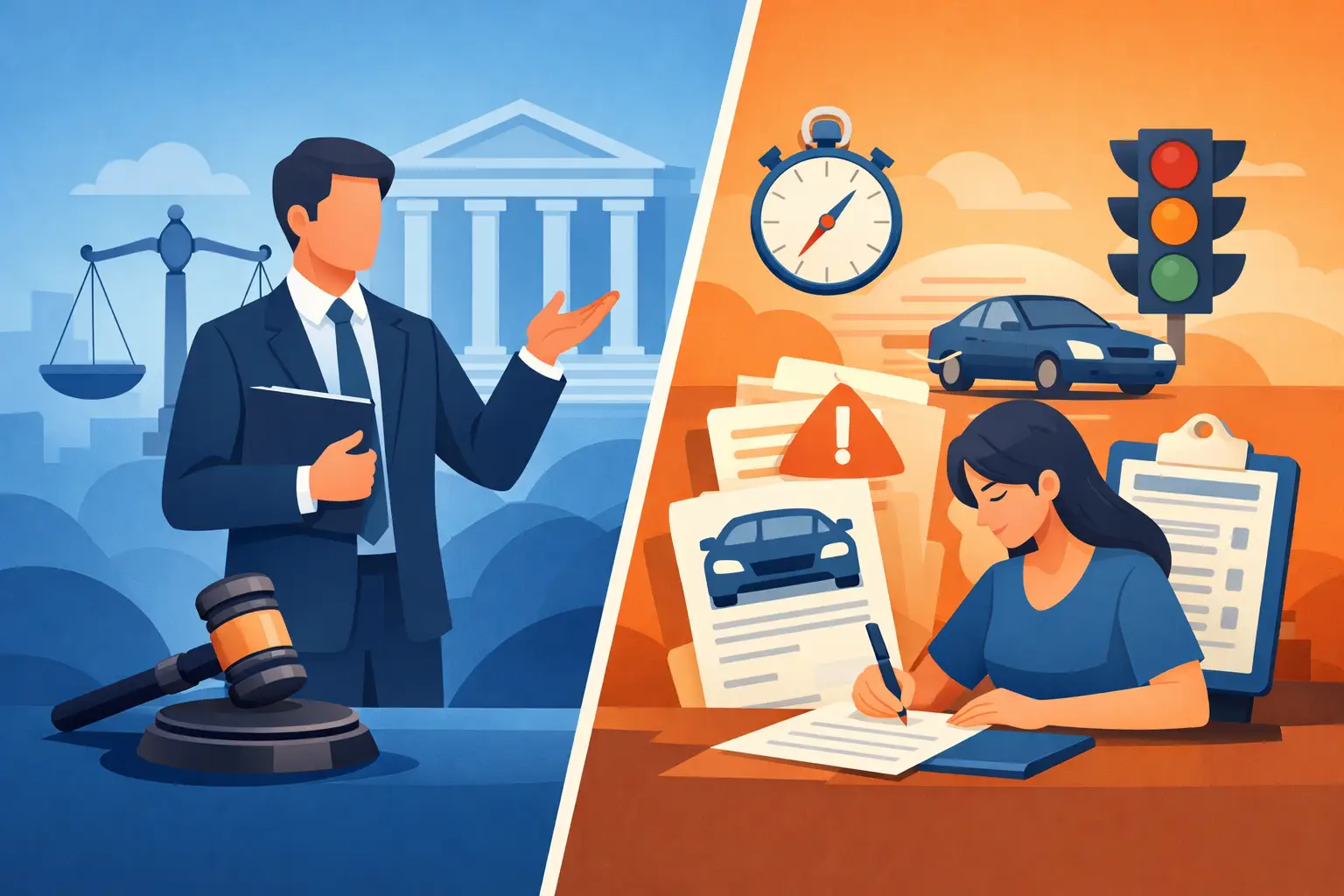
A California ticket can create pressure to make a fast choice: pay it, call a lawyer, or prepare to address it yourself. The traffic lawyer versus ticket preparation decision is not about which option is universally better. It is about the stakes of your citation, the facts on the paperwork, the evidence available, your budget, and how much direct representation you need.
Paying immediately may feel efficient, but it can close off the chance to examine the allegation and its possible consequences. Before choosing any path, read the citation, note the court deadline, and preserve anything that could help explain what happened.
What a Traffic Lawyer Does
A traffic lawyer is a licensed attorney who can provide legal advice and represent a client in connection with a traffic matter. Depending on the case and the attorney's engagement, that may include evaluating the facts, communicating with the court or prosecutor where appropriate, appearing at hearings, arguing legal issues, negotiating when available, and advising on strategy.
Representation can be particularly valuable when a citation has consequences beyond a standard fine. Examples may include a serious moving violation, an alleged misdemeanor, a collision with injuries, a commercial driver's license concern, an existing point history, a possible license suspension, or immigration, employment, or insurance consequences. A driver who cannot attend court or who is uncomfortable speaking for themselves may also place real value on attorney representation.
That support comes with a cost. Attorney fees vary by county, charge, court date, case complexity, and whether the lawyer is expected to make one appearance or handle a longer matter. No lawyer can honestly promise a dismissal, reduced fine, or a particular court result. The facts, applicable law, court practices, and available evidence still control.
What Ticket Preparation Means
Ticket preparation is support for a driver who plans to understand and organize their own response rather than hire legal counsel. It can include reviewing the citation and court paperwork, identifying factual questions, organizing records, preparing a timeline, and creating materials that help the driver present a clear, documented position.
For a California speeding ticket, for example, useful preparation may focus on the posted speed limit, the alleged speed, the road location, the time of day, weather, traffic conditions, visibility, lane configuration, and any notes or evidence related to the stop. If speed-measurement equipment is relevant, a driver may want to understand what the citation and available records indicate about radar or LiDAR context, training, calibration, positioning, or observation conditions.
Preparation does not turn a document service into a law firm. It does not include legal representation, attorney-client privilege, legal advice, or a guarantee that the court will accept a defense. Its value is more practical: it helps replace guesswork with an organized review of the specific citation before the driver pays or appears.
JusticeDrive follows this document-driven approach with a free initial California citation analysis and optional court-ready preparation materials. It is not a law firm and does not represent drivers in court.
Traffic Lawyer Versus Ticket Preparation: The Key Difference
The central difference is who carries the case forward. With a lawyer, a licensed professional can advise and represent you within the scope of the engagement. With ticket preparation, you remain responsible for your decisions, court appearance, filings, and presentation unless you separately retain an attorney.
That distinction should guide the choice. If you need someone to interpret legal risk, advocate on your behalf, or take responsibility for courtroom representation, consult a qualified traffic attorney. If you are capable of handling a lower-stakes matter yourself but want a structured review before deciding what to do, preparation support may be a more proportionate option.
Neither path eliminates your need to act by the deadline printed on your citation or court notice. Waiting for more information without tracking the due date can create a separate problem.
When a Lawyer May Be Worth the Cost
An attorney is often the more sensible option when the potential downside is unusually high or the case has complications that cannot be resolved by simply organizing documents. Consider seeking legal advice promptly if you face allegations involving reckless driving, DUI, driving on a suspended license, an accident with injury, a criminal charge, or commercial driving consequences.
You may also want representation if the ticket is part of a larger licensing issue, if you already have a significant driving record, or if a conviction could put your job at risk. Rideshare, delivery, and commercial drivers may have business consequences that exceed the face amount of a fine.
A lawyer can also be useful where there is a meaningful factual dispute but you do not have the time, confidence, or ability to develop and present it yourself. That does not mean every disputed ticket requires an attorney. It means the value of representation rises as the legal and personal consequences rise.
When Ticket Preparation Can Be a Practical Fit
Ticket preparation may fit a driver facing a routine infraction who wants to make an informed choice before automatically paying. A driver may have a plausible factual question, but not necessarily a case that warrants paying for full legal representation.
The best use of preparation is not to hunt for a magic technicality. It is to inspect whether the citation and surrounding circumstances give you questions worth raising or evidence worth preserving. That review can be especially useful when the ticket itself is difficult to read, the location is unclear, the alleged speed seems inconsistent with conditions, or court paperwork creates uncertainty about the next step.
A strong preparation process generally reviews several concrete areas:
- Citation accuracy, including vehicle information, location, date, time, code section, and officer notes.
- Evidence context, such as photographs, dashcam footage, witness information, road layout, and a driver-created timeline.
- Speed-measurement and observation context, including the stated method of detection and environmental conditions.
- Procedure and paperwork, including appearance dates, notices, instructions, and documents that may affect how a driver prepares.
The point is not that every inconsistency defeats a citation. Some errors are minor, and some facts that feel persuasive may not change the court's decision. A disciplined review helps a driver separate meaningful questions from details that are unlikely to matter.
Compare the Full Cost, Not Just the Fee
A lawyer's fee and a preparation service's fee are only part of the comparison. Drivers should also consider the potential fine, insurance impact, time away from work, travel to court, stress, and the value of understanding what they are admitting if they pay.
For someone with a clean record and a straightforward ticket, self-directed preparation may offer enough clarity at a lower cost. For someone whose license or livelihood may be affected, a higher upfront legal fee may be justified by the increased stakes. The correct choice can change even between two tickets carrying the same alleged violation.
Be cautious with any service that treats dismissal as routine or guaranteed. Courts decide cases individually. A useful service explains what it can review, what it can prepare, and where its role ends.
A Better First Step Before You Pay
Start by making a copy of every document you received. Photograph the citation clearly, record your own account while the details are fresh, and save relevant evidence such as photos of the roadway, weather records, receipts, work schedules, or vehicle records. Do not alter documents or manufacture evidence.
Then ask a direct question: do you need a lawyer to represent you, or do you first need a clearer view of the ticket's factual and procedural issues? A citation-specific review can help answer that question without assuming that every driver needs the same level of service.
Whatever route you choose, act before the deadline. A calm, organized review of the actual ticket is usually more useful than paying under pressure or relying on broad internet advice that does not account for your road, your paperwork, and your circumstances.