What Traffic Court Paperwork Can Tell You
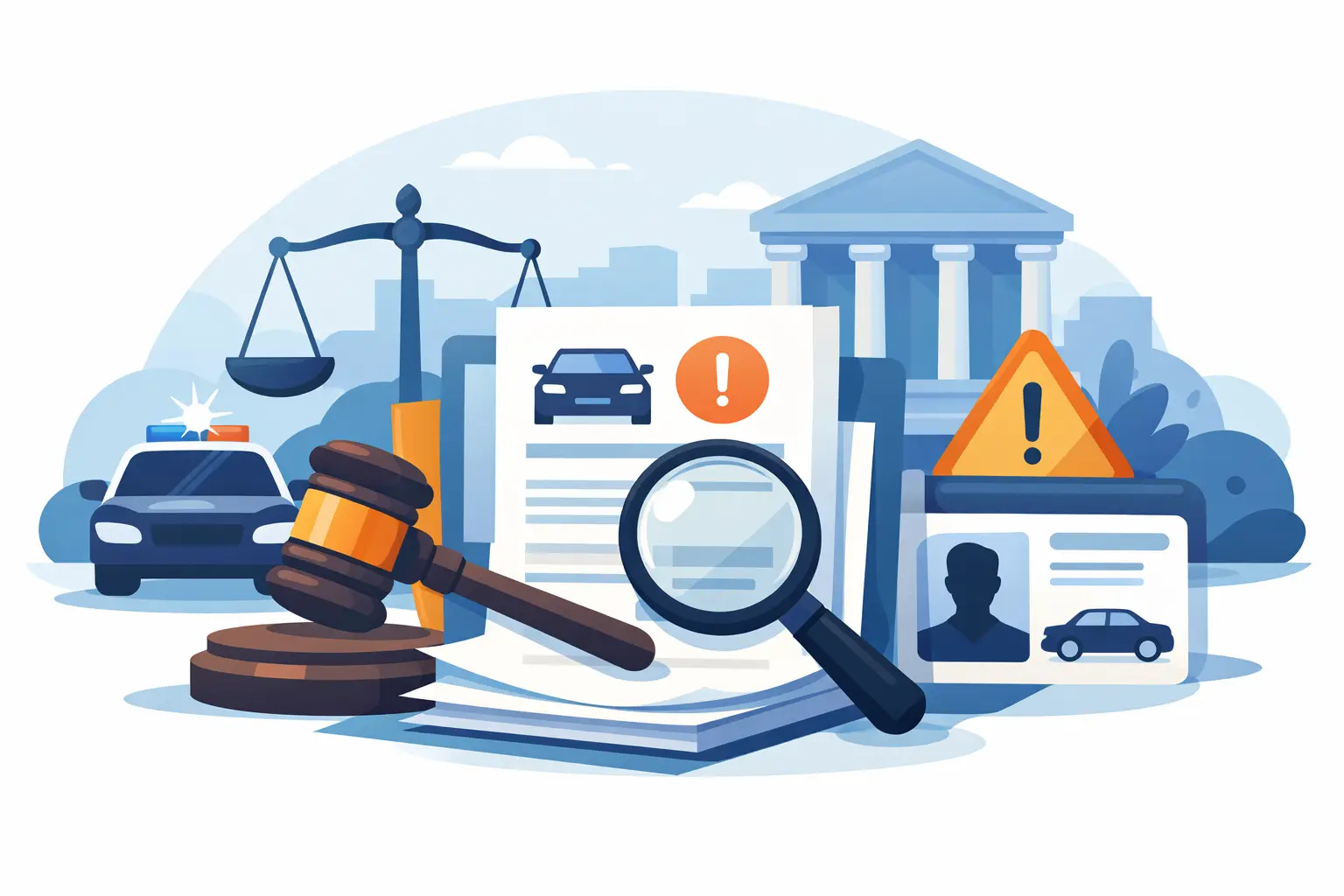
A traffic ticket is not just a fine with a payment button. It is the starting record for a case that can affect your money, driving record, insurance costs, and time. Before you pay or choose a court option, review the traffic court paperwork connected to the citation. Small details do not automatically make a ticket go away, but they can tell you what needs closer attention and what deadlines you cannot afford to miss.
For California drivers, the practical goal is not to hunt for a magic technicality. It is to compare the citation, court notice, and available facts against each other while the event is still fresh. That gives you a clearer basis for deciding whether to pay, request traffic school if eligible, contest the citation, or prepare for a court appearance.
Start With the Citation, Not the Fine Amount
The citation is the officer's written account of the alleged violation. Read every field, even the ones that seem administrative. Confirm your name, driver's license information, vehicle description, license plate, location, date, time, alleged speed or conduct, and cited Vehicle Code section.
A wrong color, a misspelled street name, or a minor typo may not change the outcome by itself. Courts often distinguish between a harmless clerical error and an error that creates real uncertainty about who, what, where, or when. The useful question is whether a discrepancy affects the reliability of the allegation or your ability to understand and respond to it.
Also look at how specific the description is. If the citation alleges speeding, does it identify the speed, the applicable limit, and the location clearly? If it involves an unsafe movement, stop sign, cell phone, registration, or equipment issue, does the written allegation match what occurred? Write down your recollection separately, including traffic conditions, visibility, road layout, conversations, and anything you observed after being stopped.
Do this promptly. Memory becomes less reliable with every passing week, especially after a routine commute or a stressful stop.
Traffic Court Paperwork Has Deadlines That Matter
Your court notice or citation should identify a response date, court location, case number, and available appearance or payment instructions. These details deserve the same attention as the alleged violation. Missing a deadline can create a much larger problem than the original ticket, including added penalties or issues tied to a failure to appear.
Do not assume the printed date is the only source of current information. Court schedules, remote appearance procedures, and case records can change. Check the court named on your paperwork and preserve proof of any filing, payment, extension request, or appearance instruction you receive.
California traffic cases may offer different paths depending on the court, the charge, and your driving history. Those paths can include paying the fine, requesting a court date, appearing through an approved remote process, seeking traffic school where eligible, or using a trial by written declaration. Each option has timing rules and trade-offs. For example, traffic school can be useful for an eligible driver focused on record consequences, but it is generally not the same as challenging the facts of the citation.
If you decide to contest a ticket, do not wait until the last day to organize your paperwork. A rushed response can leave out photos, records, or details that would have been easier to collect earlier.
Compare the Documents Against the Actual Stop
The strongest paperwork review is a comparison, not a reading exercise. Put the citation beside your notes and ask whether the key facts line up. Start with the location. A street name may be accurate while the stated block, direction of travel, lane, intersection, or speed-zone context is not.
Next, consider the time and conditions. Darkness, rain, glare, heavy traffic, construction, a blocked sign, or an unusual road configuration may be relevant depending on the allegation. These conditions are not automatic defenses. They may, however, affect how a claimed observation should be evaluated or what evidence is worth preserving.
For a speed-related citation, look for the method used to estimate or measure speed. Was it visual estimation, radar, LiDAR, pacing, or another method? The paperwork may not contain every detail, but the citation can point to the questions that matter. Road geometry, vehicle traffic, line of sight, distance, weather, and the possibility of measuring the wrong vehicle can be relevant in a particular case.
Equipment-related tickets require a different comparison. If the citation concerns lights, windows, registration, or another correctable condition, keep receipts, photographs, inspection paperwork, and any proof of correction. A corrected issue does not always erase the case, and local procedures vary, but documentation can still be central to resolving it properly.
Look for Gaps, Then Look for Evidence
A gap in traffic court paperwork is only meaningful if it connects to something that can be examined. Instead of stopping at “the ticket looks wrong,” identify the question created by the discrepancy.
For example, an unclear location may lead you to photograph the area, document speed-limit signs, or note construction conditions. A question about weather or visibility may lead you to preserve weather records and photos taken at a similar time of day. A question about a speed measurement may lead you to organize what the citation says about the method, conditions, and vehicle identification.
Keep the materials orderly. Use filenames that identify the date and subject, such as “May 14 intersection photo” or “repair invoice.” Keep original copies of digital photos when possible, rather than only cropped screenshots. If a passenger saw the stop or has relevant observations, write down their contact information and what they personally observed.
Avoid altering, annotating, or trying to “improve” original documents. Your notes should be clearly separate from the citation, notice, photographs, and receipts. Organization makes it easier to explain the sequence of events without overstating what the evidence proves.
Court Forms Are Part of Your Preparation
A traffic case can involve more than the citation itself. Depending on the option you choose, you may need forms or written materials related to an appearance, a continuance request, traffic school, a correction, or a written declaration. Read each form for its specific deadline, signature requirement, supporting-document instructions, and filing method.
A common mistake is treating a form as completed once it is written. It also has to be submitted to the right court, in the required format, by the correct date. Save confirmation pages, stamped copies, mailing records, or other proof that the court received it. If you mail paperwork, allow time for delivery and processing rather than assuming a postmark resolves every issue.
Be precise in written statements. State what you personally saw, heard, or did. Separate facts from conclusions. “The roadway was wet, and I was traveling behind a large delivery truck” is more useful than a broad claim that the stop was unfair. A calm, factual record is easier for a court to evaluate.
When a Document Review Is Worth the Time
Not every ticket requires a lengthy challenge. Sometimes the citation is clear, the deadline is close, and paying or pursuing an eligible traffic-school option is the most practical choice. In other cases, the financial stakes, driving-record impact, disputed facts, or potential evidence issues justify a more careful review before any payment is made.
That is where a document-driven process can help. JusticeDrive reviews California citations and related paperwork for possible factual, procedural, measurement, environmental, and evidence-related issues before a driver decides what to do next. The initial review can help turn a stack of confusing documents into a defined set of questions and preparation steps.
JusticeDrive is not a law firm and does not represent drivers in court. A paperwork review does not guarantee dismissal, a reduced fine, or any particular result. If your situation involves a serious charge, an accident, a commercial license concern, immigration consequences, or consequences beyond a standard traffic matter, consider getting advice from a qualified California attorney.
Before your response date, make one clean folder with your citation, court notice, notes, photographs, receipts, and proof of any completed steps. The ticket may be a single sheet of paper, but the paperwork around it is where deadlines, disputed facts, and your next decision start to come into focus.