How Weather Affects Speeding Ticket Evidence
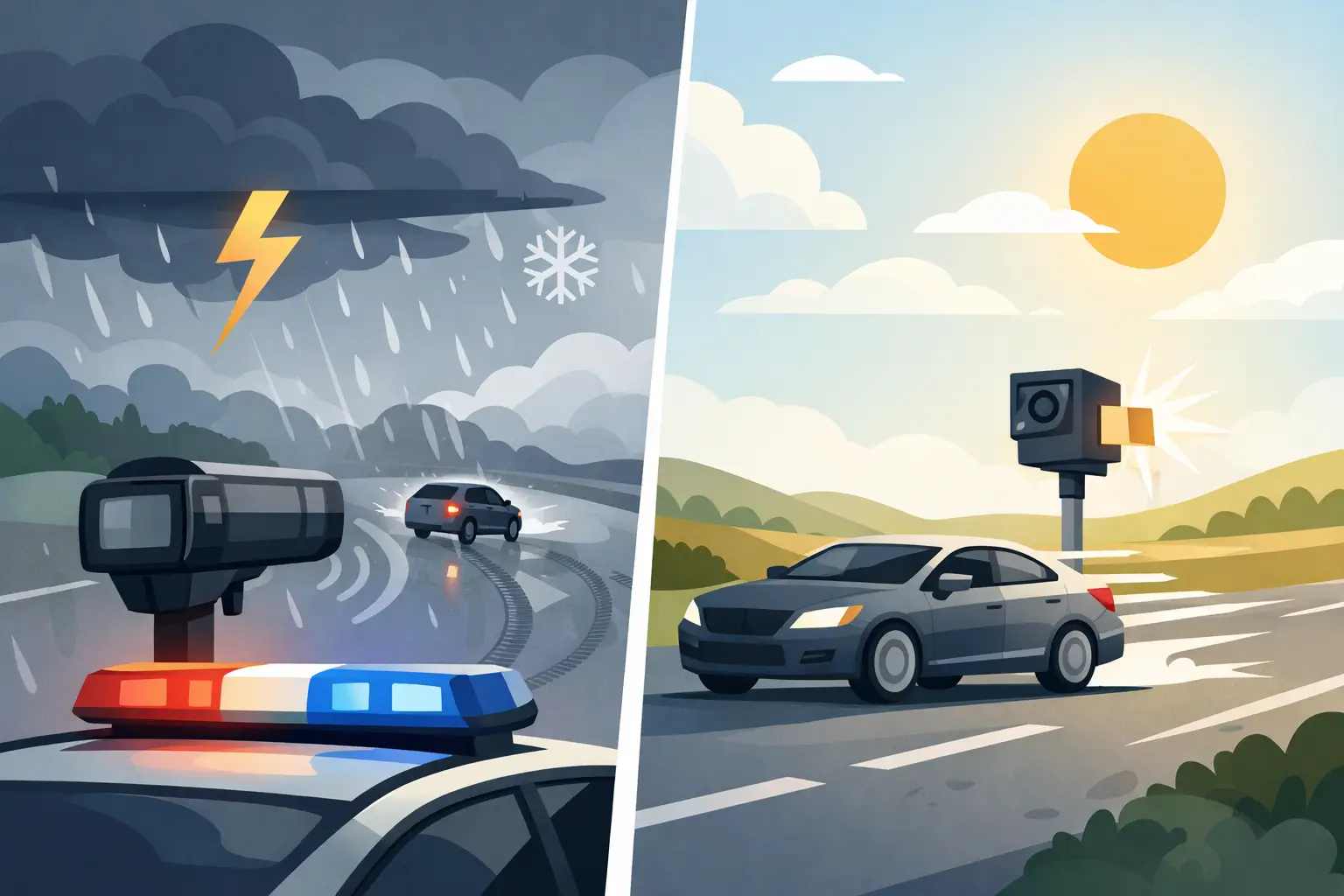
Rain on the windshield, fog over the roadway, or glare from a low sun can change more than the way a drive feels. They can affect how weather affects speeding ticket evidence, including what an officer could see, how a speed was measured, and whether the written citation tells the full story.
Weather does not automatically erase a California speeding ticket. A radar reading may still be reliable in rain, and an officer may still have a valid basis for a citation in clear but windy conditions. But weather can create factual questions worth reviewing before you pay. The key is to compare the conditions on the road with the officer's observations, the alleged speed, the measurement method, and the paperwork.
How Weather Affects Speeding Ticket Evidence in California
Weather can matter in two different ways. First, it may affect the evidence used to establish your speed. Second, it may affect whether the alleged speed was reasonable for the conditions.
These are separate issues. If an officer used radar or LiDAR, the question may be whether the device reading was properly obtained, identified with your vehicle, and documented. If the citation concerns driving too fast for conditions, weather becomes central because the officer must describe conditions that made the speed unsafe.
California's basic speed law generally focuses on whether a driver traveled at a reasonable or prudent speed for weather, visibility, traffic, the road surface, and other conditions. That does not mean rain alone proves a ticket or defeats one. It means the specific facts matter: heavy rain versus a light drizzle, standing water versus dry pavement, dense fog versus clear visibility, and congested traffic versus an open highway.
Rain, wet pavement, and limited visibility
Rain may affect an officer's ability to estimate speed visually, particularly at night or in heavy traffic. Water spray from other vehicles, reflections from headlights, and reduced contrast can make it harder to track one vehicle accurately. If the officer paced your car, wet roads and traffic conditions may also be relevant to whether a steady, reliable pace was maintained.
For a ticket based on unsafe speed for conditions, wet pavement may support the officer's concern, but the report should still connect the conditions to your driving. Useful details include traffic volume, lane position, visibility distance, precipitation intensity, pooling water, and whether there was skidding, abrupt braking, or another observable safety issue. A bare statement that "roads were wet" may leave unanswered questions.
Fog, smoke, dust, and glare
Fog, wildfire smoke, dust, and sun glare can reduce visibility sharply, sometimes in localized areas. These conditions can matter when an officer claims to have visually identified a particular vehicle before obtaining a speed reading. They can also matter where the citation alleges an unsafe speed because a driver may have had less time and distance to identify hazards.
The timing and location are especially useful here. Coastal fog can differ dramatically within a few miles. Smoke conditions can shift during a commute. Low sun glare may be severe in one direction and minimal in the other. A general weather report is less persuasive than information tied to the roadway, direction of travel, and approximate time of the stop.
Wind and road hazards
Strong wind is not usually a direct explanation for a radar or LiDAR reading, but it can be relevant to roadway safety and an officer's observations. Wind can move debris into lanes, affect high-profile vehicles, and combine with rain or dust to change driving conditions quickly.
If weather contributed to a hazard, document the actual condition rather than assuming it helps your position. For example, a fallen branch, a construction sign, or blowing dust could support an explanation for a brief speed change or lane movement. On the other hand, the same facts may support an allegation that a lower speed was necessary. The evidence has to be viewed honestly from both sides.
Weather and Radar or LiDAR Evidence
Radar and LiDAR are often described as objective, but a number on a device is only part of the evidentiary picture. The surrounding conditions can affect how an officer selected a target, maintained visual tracking, and connected a displayed speed to your specific vehicle.
Radar uses radio waves and can generally function in rain or fog. That fact alone does not end the review. In traffic, radar may detect a stronger or larger nearby target. When multiple vehicles are traveling close together, questions may arise about target identification, antenna mode, patrol-car movement, and the officer's visual estimate.
LiDAR uses a narrow laser beam and is usually more vehicle-specific than radar, but it still requires proper aiming, a clear enough line of sight, and correct operation. Rain, heavy spray, fog, a dirty windshield, or an obstructed view may be relevant depending on the intensity of the condition and where the officer was positioned. These facts do not prove the reading was wrong. They help identify what should be examined.
A productive evidence review asks practical questions: Was the measurement method listed on the citation or in related paperwork? Was the officer stationary or moving? Were other vehicles near yours? Was there a hill, curve, overpass, large vehicle, or roadside obstruction? Did the officer describe the weather and visibility? Were you able to see the officer's position before the stop?
What to Preserve Before Conditions Change
Weather evidence is time-sensitive. A roadway may be dry by the next morning, and a forecast page may not capture what happened at the exact location. Start preserving details while your memory is fresh.
Write down the stop location, direction of travel, date, approximate time, lane, traffic level, and weather as you experienced it. Note whether it was raining lightly or heavily, whether wipers were on, whether the roadway had standing water, and whether headlights were needed. Include anything that affected visibility, such as fog, smoke, glare, road spray, or a large vehicle ahead of you.
Photos and video can help if they are taken safely and accurately. A later photograph of the road may show a curve, slope, sign placement, or officer vantage point, but it may not prove the prior weather. Preserve original files where possible, since dates and times can matter. Dashcam footage, passenger observations, weather alerts, and contemporaneous messages may also provide context.
Do not alter images, crop out relevant details, or present a later weather condition as though it existed during the stop. Credibility matters. The goal is to organize accurate information, not manufacture a defense.
Review the Citation for Missing Context
The citation is not always a complete account of the event, but it is the starting document. Compare its entries with what you recall. Check the alleged speed, posted speed limit, code section, location, time, vehicle description, and court appearance information.
Then look for the weather and roadway context. If the officer cited unsafe speed for conditions, does the citation identify the condition? If visibility was limited, is that noted? If radar or LiDAR was used, does the paperwork indicate the method? A missing detail is not automatically fatal to a case, but it may identify an issue to investigate or prepare to address.
It can also be useful to separate what you know from what you assume. You may know it was raining and that three vehicles were traveling beside you. You may not know the device's calibration history, the officer's training records, or the full contents of the officer's notes. That distinction helps you focus on records and questions that could actually clarify the evidence.
Decide on a Practical Next Step
Before paying a ticket, consider the full cost: the fine, possible insurance consequences, time away from work, and any effect on a commercial, rideshare, or delivery-driving role. Paying may be the simplest choice in some situations, but it is still a decision with consequences.
If weather, road conditions, speed-measurement context, or citation details raise questions, organize the facts before deciding how to proceed. JusticeDrive can provide a free initial California citation review that examines the ticket, possible evidence gaps, weather and roadway context, officer-procedure signals, and court paperwork. It is not a law firm, does not provide legal representation, and cannot guarantee a dismissal, reduced fine, or any court outcome.
A ticket is easier to evaluate when the details are still available. Preserve the conditions you experienced, read every line of the citation, and make your next decision based on the record rather than the pressure to pay quickly.