How to Check Radar Calibration After a Ticket
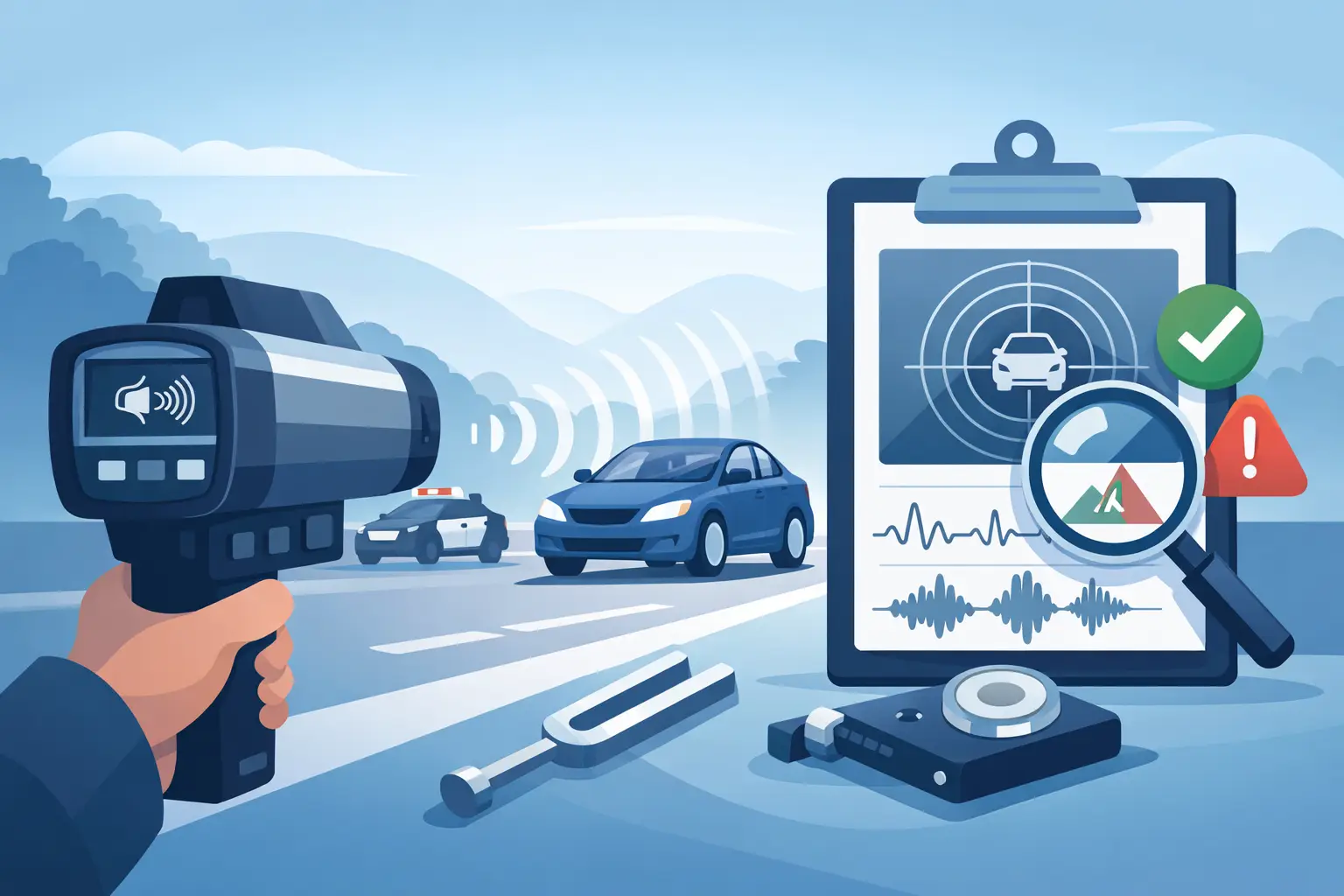
A radar-based speeding ticket can feel final the moment you see a speed printed on the citation. It is not. Knowing how to check radar calibration gives you a practical way to examine one part of the evidence before you pay the fine or decide how to respond.
For a California driver, the point is not to assume the radar was wrong. The point is to determine whether the equipment, the officer’s procedure, and the paperwork support the allegation. A current calibration record may strengthen the prosecution’s evidence. Missing, unclear, or inconsistent records may raise questions worth preserving and reviewing.
Start With What the Citation Actually Says
Read every field on the ticket before focusing on radar records. Look for the alleged speed, posted or applicable speed limit, violation code, location, date and time, officer name or badge number, and court information. Some citations also identify a radar or LiDAR device, but many do not list a manufacturer, model, serial number, or the unit used during the stop.
That missing detail does not prove an equipment problem. It does tell you what information you may need to request or ask about later. A radar record is useful only if you can connect it to the device and event involved in your citation.
Also compare the ticket with your own memory while it is fresh. Were there several vehicles nearby? Were you traveling uphill, downhill, around a curve, or in a heavy traffic flow? Was the officer parked across multiple lanes or moving in the opposite direction? Weather, road layout, and traffic conditions do not automatically defeat a radar reading, but they can matter when evaluating whether the officer could reliably identify your vehicle as the source of the reading.
What Radar Calibration Usually Means
“Radar calibration” is often used as a catch-all phrase, but it can refer to different checks. A radar unit may undergo periodic professional calibration or certification. Separately, an officer may be trained to conduct function tests before or after a shift, often using the device’s internal test features or tuning forks designed for that unit.
These are related but not identical. A certificate showing that a unit was checked by a qualified service provider may address the device’s condition at a particular point in time. An officer’s field test documentation may show whether routine operational checks were performed around the time of your stop. The available evidence depends on the agency, the equipment, and the facts of the case.
Do not expect a single document titled “calibration certificate” to answer every question. A useful review considers whether the documentation identifies the device, when the testing occurred, what type of test was performed, and whether it is tied to the radar unit allegedly used.
How to Check Radar Calibration Records
Your first practical step is to identify the court deadline. A request for information should not cause you to miss the appearance date, a deadline to request a trial, or another response deadline shown on your citation or court notice.
Next, organize your request around the ticket rather than making a broad demand for every department record. You can ask the relevant agency or prosecutor, depending on the local process, whether records are available concerning the speed-measurement device used in your stop. Court procedures and agency practices vary, so confirm the appropriate request process with the court clerk or agency records unit.
When requesting or reviewing radar-related information, focus on these four items:
- The radar unit’s make, model, and serial number, if available.
- Calibration, maintenance, or certification records for that specific unit.
- Records or notes showing routine operational testing near the date of the citation.
- The officer’s training or qualification records related to the device, when relevant and available.
Keep copies of every request, response, receipt, and document you receive. Note the date you made the request and the date of any reply. If records are not provided, do not fill the gaps with assumptions. Document what you asked for, who you contacted, and what response you received. That paper trail can be more useful than a vague recollection later.
Match the Record to Your Stop
The most common mistake is treating any radar certificate as proof that the particular reading in your case is reliable - or unreliable. The details matter.
Check whether the serial number on the certificate matches the device identified in the officer’s notes or records. A certificate for a different radar unit does not necessarily establish anything about the unit used in your stop. Check the date as well. A record completed long before or after your citation may still be relevant under an agency’s testing schedule, but it deserves context rather than a quick conclusion.
Look for unexplained inconsistencies. For example, the paperwork may list a device type that does not match the cited equipment, a missing serial number, an unclear test date, or a test record that appears incomplete. These issues are not automatic dismissal arguments. They are factual questions: Which unit was used? Was it functioning properly? Was it tested according to the agency’s procedure? Can the witness explain the record?
If the officer used moving radar, additional context can matter. Moving radar can involve a patrol vehicle’s speed, direction of travel, target identification, and traffic conditions. A calibration record alone may not address whether the officer isolated your vehicle’s speed correctly in a group of cars.
Calibration Is Only One Part of a Speeding Case
A properly maintained radar device can still leave other evidence questions. The officer may need to explain how they identified your vehicle, observed traffic, operated the equipment, and connected the displayed speed to you. Your citation may also involve a basic speed law allegation, where road, traffic, and weather conditions can be part of the overall analysis.
For that reason, do not build your entire response around the word “calibration.” Review the ticket alongside photographs of the location, your own notes, available road conditions, any dashcam evidence, and court notices. If the citation has clerical errors, preserve those too, but recognize that not every paperwork error changes the underlying allegation.
It also depends on the outcome you want. Some drivers want enough information to decide whether paying is their best option. Others want to prepare for a court appearance or written trial. A useful document review should separate a real evidence gap from a point that is unlikely to affect the case.
Questions to Ask at a Hearing
If you contest the ticket and the officer testifies about radar, focused questions are generally more useful than accusations. You may want to understand what device was used, how it was tested, whether the officer can identify its records, and how your vehicle was selected from surrounding traffic.
For example, you might ask when the unit was tested, what testing method was used, whether the officer recorded the results, and whether the serial number on the documentation matches the unit in use. If traffic was heavy, ask how the officer determined that the displayed speed belonged to your vehicle rather than another vehicle in the radar beam.
Stay with facts you can support. A hearing is not improved by arguing that all radar is inaccurate or that every missing detail means the citation must be dismissed. The stronger approach is to identify a specific missing record, inconsistency, or observation issue and explain why it matters to the reliability of the evidence.
Keep the Review Practical
Radar calibration can be a meaningful review category, but it is rarely a stand-alone answer. The value comes from connecting the equipment records to the citation, the officer’s account, and the real conditions at the location.
JusticeDrive can review a California traffic citation for possible radar or LiDAR context, paperwork issues, road conditions, and other documented defense signals before you decide what to do next. It is not a law firm, does not provide legal representation, and cannot guarantee a dismissal or reduced fine.
Before you pay a ticket, give yourself enough time to read the citation closely, preserve your records, and ask whether the evidence actually matches what happened on the road. A careful question supported by documents is more useful than an assumption in either direction.