Court Preparation for California Traffic Tickets
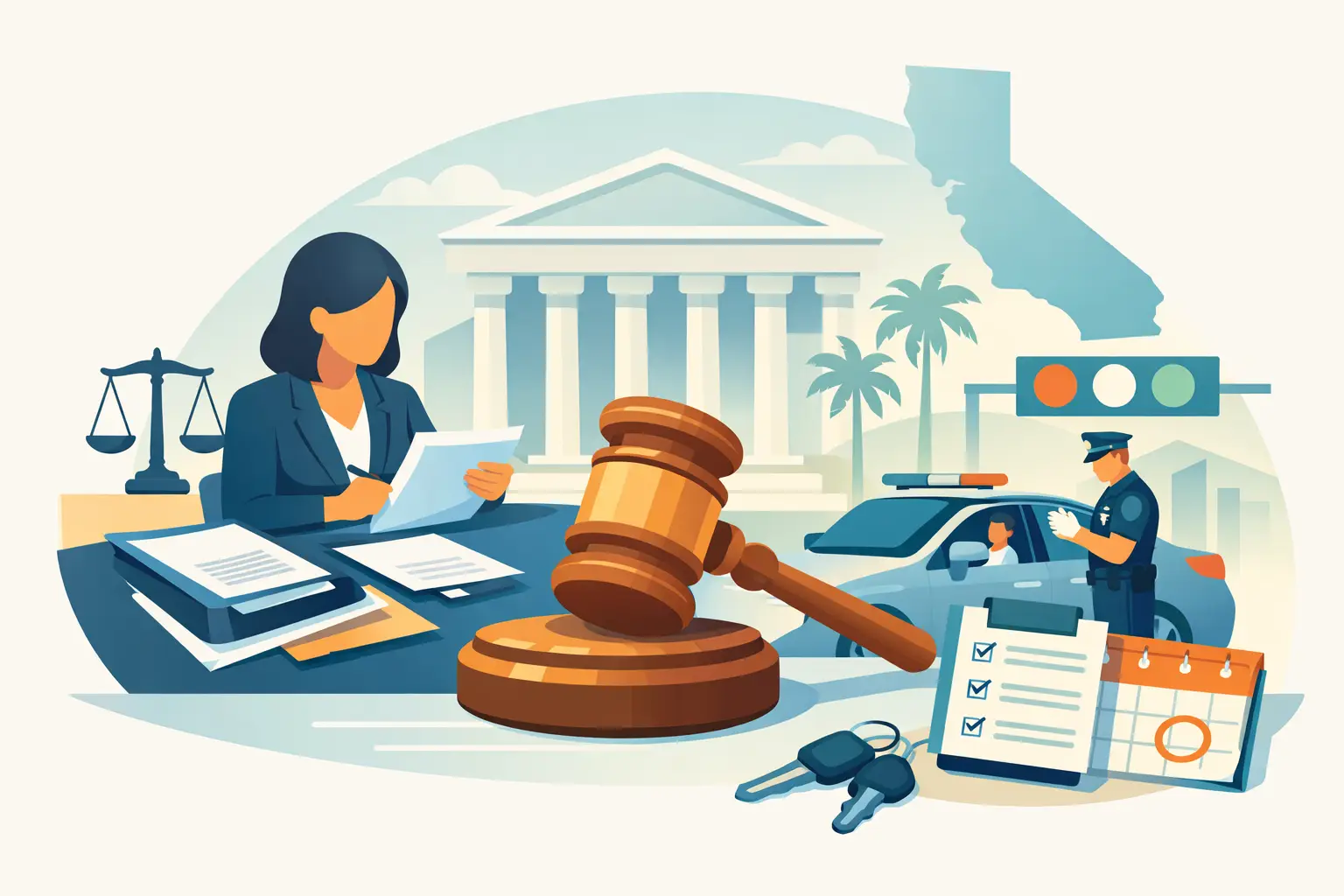
A traffic ticket can look simple until you see the due date, fine amount, and court instructions. Before you pay, build a clear record of what happened. Court preparation gives you a practical way to review the citation, protect useful evidence, and decide whether appearing in court makes sense for your situation.
Paying a California traffic ticket may carry consequences beyond the immediate fine, including points, insurance effects, or licensing concerns depending on the violation and your driving history. A court appearance also takes time. The goal is not to assume a ticket will be dismissed. It is to make a decision based on the actual citation, available evidence, and court requirements rather than stress or guesswork.
Court Preparation Starts With the Ticket
Start with the document in front of you. Read every field, not just the alleged violation and fine. Confirm your name, driver license information, vehicle details, location, date, time, code section, officer information, and appearance or response deadline.
Small details do not automatically invalidate a citation. Courts may treat some mistakes as harmless or correctable. Still, a mismatch between the ticket and the event can matter, especially when it affects identification, the location, the alleged conduct, or your ability to understand and respond to the charge.
Make a copy of the front and back of the citation. Keep the original in a safe place, then create a simple case folder, whether digital or paper. Include the ticket, any court notices, photographs, notes, and copies of anything you submit. Name files clearly with the date so you can find them later.
The deadline is the first item to calendar. Do not rely on memory or assume a notice will arrive before action is required. Check the court named on the citation for current response instructions, including whether a matter can be handled by mail, online, by phone, or in person. Procedures can differ by county and can change.
Write Down What Happened While You Remember
Your memory is evidence of a sort, but it fades quickly. Write a factual account as soon as possible. Focus on what you saw, heard, and did - not what you think the officer intended or what you hope the court will decide.
Record where you were traveling, your direction of travel, traffic conditions, weather, visibility, lane position, nearby signs, and the interaction with the officer. If the citation involved speed, note whether traffic was moving as a group, whether you saw a radar or LiDAR device, where the officer was positioned, and whether there were curves, hills, large vehicles, or other conditions that could affect observation.
Also document what the officer said about the alleged violation. For example, if the explanation changed during the stop, or if you were told one reason but cited for another, write down the sequence accurately. Do not fill gaps with assumptions. A short, precise note is more useful than a dramatic account written weeks later.
Preserve Evidence Before It Disappears
Some evidence is easiest to collect in the first few days after a stop. Road layouts change, temporary signs are removed, construction ends, and video files may be overwritten. If it is safe and lawful to do so, revisit the area in daylight and take photographs or video from relevant viewpoints.
Useful materials may include:
- Photos of traffic signs, lane markings, intersections, sight lines, and roadway conditions
- Images that show whether signs were blocked, faded, missing, or positioned after a turn or lane change
- Dashcam footage, passenger video, or location-history records that may establish timing or travel route
- Repair or registration records when the allegation involves equipment, plates, lights, or vehicle documentation
- Weather records or contemporaneous photos when rain, fog, glare, or road conditions may have affected visibility
Preserve the original files when possible. Screenshots and edited clips can be useful for organization, but originals carry more context, such as timestamps and file information. Do not alter images, stage photos, or submit material that does not fairly represent the conditions at the time of the stop.
Witnesses can be helpful, but only when they have direct knowledge. A passenger who observed the road and traffic may be able to describe what happened. A friend who heard your version afterward cannot establish the same facts. If a witness is willing to help, ask them to write their own factual account promptly, in their own words.
Review the Citation From More Than One Angle
A ticket is an allegation, not a full account of the event. Effective court preparation means looking at several categories at once: the facts stated on the citation, the evidence you can preserve, the officer's observations, measurement context when speed is involved, environmental conditions, and court paperwork.
For a speeding citation, questions may include how speed was observed, whether radar or LiDAR context is identified, whether the officer had a clear view, and whether traffic, terrain, weather, or other vehicles could affect the observation. Those questions do not create a defense by themselves. Their value depends on the specific facts and what can be supported with reliable documentation.
For sign, signal, lane, or right-of-way allegations, examine the physical setting. Was the sign visible from your approach? Were pavement markings clear? Was there active construction, an unusual traffic pattern, or an obstructed view? Return to the scene carefully and document it without creating a safety risk.
For equipment-related citations, verify the condition of the vehicle and the wording of the alleged defect. A repair receipt may show that an issue was corrected, but whether that affects the case depends on the charge and local court process. Keep records rather than assuming a repair resolves the citation.
A document-driven review can help identify questions worth pursuing before you choose a response. JusticeDrive provides California drivers with an initial citation review and optional court-ready preparation materials, but it is not a law firm, does not represent drivers in court, and cannot guarantee any result.
Build a Court-Ready File
Your file should make it easy to find the right document without shuffling through your phone at the last minute. Put the citation and court notice first, followed by your written timeline, photographs, video information, witness materials, repair records, and any correspondence.
Use a one-page timeline to organize the event. List the date and time of the stop, the route, relevant conditions, the officer interaction, the deadline, and every action you took afterward. This is not a speech for the judge. It is a tool that keeps your facts consistent and prevents you from overlooking a document.
If you plan to use photos, print clear copies if the court requires paper materials or if you are appearing in person. Label them simply, such as Photo 1: westbound approach to intersection. Avoid annotations that argue your case unless you can explain exactly what the image shows. Bring the originals or retain access to them if authenticity becomes an issue.
Review court notices for instructions on submitting evidence, requesting a hearing, or using a written process if available. Do not assume that bringing documents to court means they will automatically be considered. Deadlines, filing rules, and hearing procedures matter.
Prepare What You Will Say, Not Just What You Will Bring
At a hearing, concise facts are usually more effective than a long explanation. Practice stating your position in a few sentences: what the citation alleges, what you directly observed, and what evidence supports your account. Speak respectfully, even if you disagree strongly with the officer's version.
Separate facts from conclusions. Saying the sign was hidden by tree branches is a factual claim that can be supported by a photograph. Saying the ticket was unfair is a conclusion. The first gives the court something specific to evaluate; the second may not.
Be ready for uncertainty. You may not remember every detail, and an honest answer is better than an invented one. If an image was taken after the citation date, say so. If weather conditions changed between the stop and your site visit, acknowledge that too. Credibility depends on accuracy, not perfect certainty.
Know When Additional Help May Be Appropriate
Self-preparation can be a reasonable path for many routine citations, particularly when you can organize the documents, meet deadlines, and present a clear factual account. It may not be the right path for every driver.
Consider getting advice from a qualified California attorney if the matter involves an accident, injury, allegations of reckless driving, a possible license suspension, a commercial driver license, immigration consequences, a criminal allegation, or facts that could create serious financial or professional risk. Court staff can explain administrative procedures, but they generally cannot tell you what legal choice to make.
The best next step is often the least dramatic one: protect the deadline, preserve the facts, and review the paperwork before making a payment or entering a response. A well-organized file gives you a better starting point, whatever you decide to do next.