Can Radar Be Wrong on a Speeding Ticket?
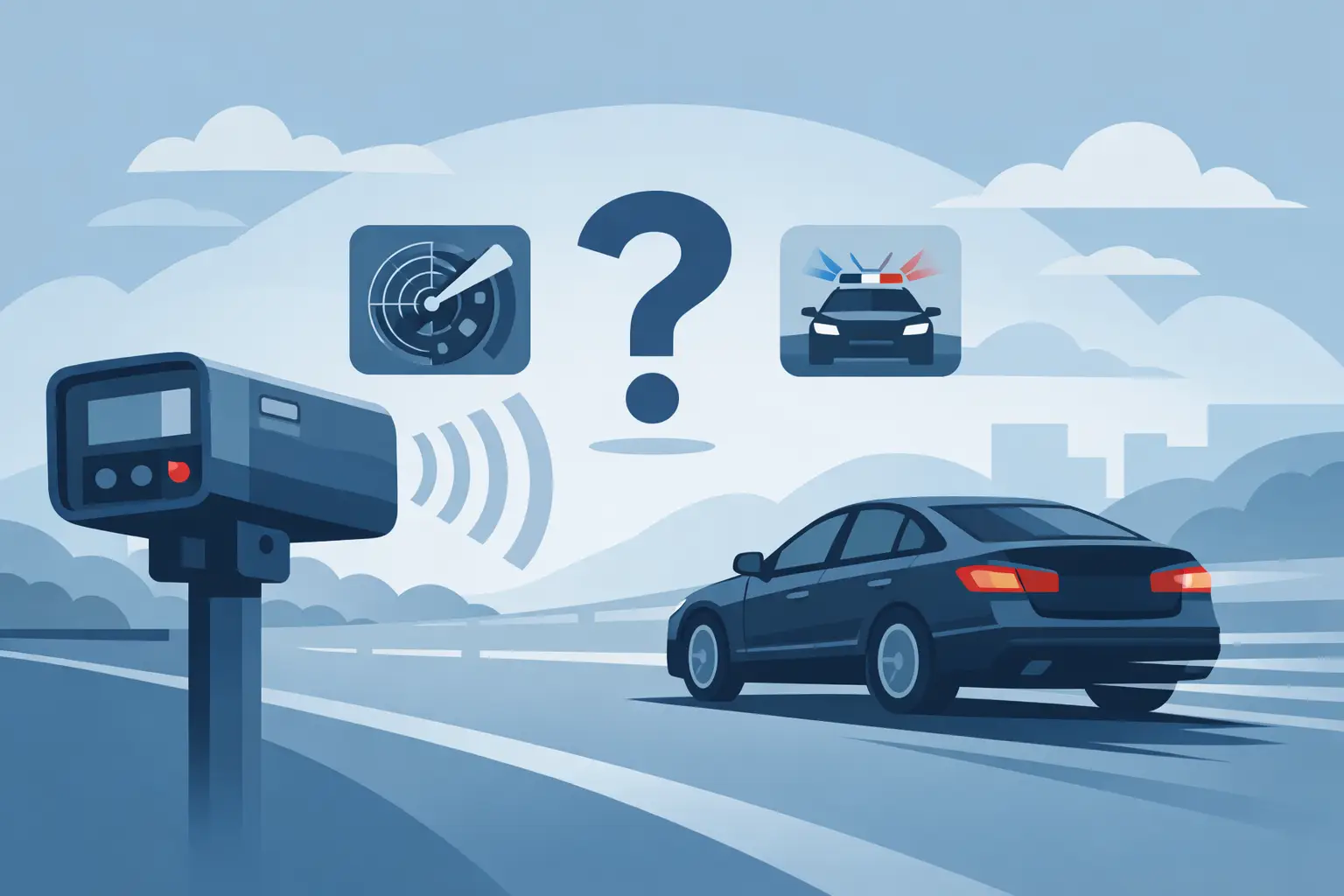
A radar number on a citation can look final: 72 mph in a 55 mph zone. But the number did not appear by itself. It came from a device, an officer’s observations, the road environment, and documentation that may or may not show how the reading was tied to your vehicle. That is why the answer to can radar be wrong on a speeding ticket is yes - but a possible issue is not the same as a guaranteed defense.
For California drivers, the practical question is not whether radar can ever make a mistake. It can. The question is whether the facts, records, and procedures connected to your ticket leave a meaningful issue to examine before you pay the fine or decide how to respond in court.
Can Radar Be Wrong on a Speeding Ticket? Yes, in Several Ways
Police radar measures speed by transmitting radio waves and calculating the change in frequency of the returning signal. Used correctly, it can be persuasive evidence. It is not infallible, and the reading still needs context.
A radar device may capture the speed of a vehicle other than the one the officer intended to measure. This is more likely to matter in dense traffic, on multilane roads, near large vehicles, or where cars are approaching and passing each other at different speeds. The device can produce a speed reading, but the officer must still be able to connect that reading to the cited vehicle.
The issue may also involve the device itself. Radar equipment is generally expected to be maintained, checked, and operated according to applicable procedures. If a device was not properly tested before or after use, had an unclear maintenance history, or was operated in a way that creates doubt about the reading, those details can be worth reviewing. They do not automatically erase a ticket, but they can affect how strong the evidence appears.
Human judgment matters too. An officer may estimate a vehicle’s speed visually, use radar to confirm that estimate, and identify one car among many. A clear line of sight and light traffic make that identification easier. A crowded highway, a curve, a hill, rain, glare, or several vehicles moving together can make it harder.
A Radar Reading Is Not the Whole Case
A speeding citation may identify the alleged speed, posted limit, location, vehicle, date, and code section. Those basic facts deserve a careful comparison with what actually happened. Even a valid radar reading does not answer every question about the citation.
Start by checking whether the ticket accurately identifies the road, direction of travel, lane area, time, and alleged speed. Small errors do not always change the outcome. Still, an incorrect location, an impossible time sequence, an unclear speed limit, or details that conflict with available evidence can be relevant.
Then consider the setting. Was the officer positioned where they could clearly observe your vehicle? Was traffic sparse enough to distinguish your car from nearby vehicles? Did a truck, motorcycle, or faster vehicle pass close by when the reading was taken? Were there curves, elevation changes, construction barriers, weather conditions, or visual obstructions?
These questions are not technical trivia. They help determine whether a radar number can be reliably attributed to one specific vehicle. A court will evaluate evidence in context, not just the number printed on a citation.
Moving Radar and Stationary Radar Create Different Questions
Radar used from a parked patrol vehicle raises one set of questions. Radar used while the patrol vehicle is moving raises another. Moving radar generally accounts for both the patrol vehicle’s speed and the target vehicle’s speed, which adds another part of the measurement process.
If the officer was driving when the reading was taken, the circumstances may deserve closer review. Was the patrol vehicle traveling in the same direction or the opposite direction? Was the officer’s own speed reasonably established? Did traffic or road conditions create possible interference? The answer may be in the officer’s notes or testimony rather than on the face of the ticket.
That does not mean moving radar is unreliable by definition. It means the method and identification of the target vehicle matter.
California Speed Limits, Surveys, and Speed Trap Issues
California has rules that can affect how certain speed enforcement is evaluated, particularly on roads where a basic speed law or a posted speed limit is involved. One commonly discussed issue is the engineering and traffic survey used to support enforcement on particular roadways.
The details can be fact-specific. The type of road, the speed law cited, the posted limit, the date of the survey, the reason for a particular speed limit, and exceptions in the law can all matter. A driver should not assume that every ticket on a road with an older or unavailable survey is invalid. Likewise, a citation should not be treated as automatically correct simply because an officer used radar.
This is one reason a document-based review can help before a driver decides to pay. The citation itself may show a code section and location, while court paperwork, local records, officer statements, or available road evidence may add context. The goal is to identify questions worth raising, not to force a theory onto facts that do not support it.
What to Preserve After Receiving a Radar Ticket
If you believe the radar reading may not have been connected to your vehicle, act while the details are fresh. Write down what you remember: where the officer was located, traffic conditions, weather, your lane, nearby vehicles, and whether the officer was parked or moving. Include what the officer said about radar, your speed, or visual observation.
Take photos of the area if it is safe and legal to do so. Capture speed-limit signs, road geometry, curves, intersections, lane configuration, sight lines, construction, and any conditions that may have affected identification. Photos taken days later may not show the same traffic or weather, but they can still document the physical layout.
Keep the original citation and every court notice. Confirm the appearance date, response deadline, courthouse, and citation number. Missing a deadline can create problems separate from the merits of the speeding allegation.
You may also want to organize questions about the evidence, including whether radar or LiDAR was used, whether the device was tested, how the officer identified your vehicle, and what speed-limit documentation applies at the location. The exact process for obtaining or raising evidence can vary by county and case posture.
Common Arguments That Need More Than a Hunch
“I was keeping up with traffic” is understandable, but it does not by itself disprove a radar reading. “The officer had no proof” may also be too broad if the officer can testify about their observation, device use, and training.
A stronger approach ties a specific concern to a fact. For example, several vehicles were clustered together when the officer measured speed; the officer was traveling in the opposite direction; the cited location does not match the stop location; or the roadway’s posted limit and enforcement records need clarification. These points may or may not succeed, but they are concrete enough to investigate.
Avoid altering, withholding, or manufacturing evidence. Accurate notes, photos, records, and a careful reading of the paperwork are more useful than an exaggerated claim. Credibility matters when you are presenting your own account.
Decide Before You Pay
Paying a ticket can have consequences beyond the immediate fine, including potential effects on your driving record, insurance costs, and time spent completing traffic school if eligible. It may also close off options you would have preferred to consider first. That is why it makes sense to review the citation promptly, not after the deadline is near.
JusticeDrive can provide a free initial, California-focused review of an uploaded traffic ticket to identify possible citation, evidence, radar or LiDAR, weather, road-condition, officer-procedure, and court-paperwork issues. This is informational preparation support, not legal representation, and it does not guarantee a dismissal, a reduced fine, or any particular court outcome.
A radar ticket is not necessarily wrong because you disagree with the speed. But you do not need to treat the printed radar number as the end of the inquiry either. Preserve the facts, read the paperwork closely, and make your decision with a clear view of what the citation actually shows - and what it does not.