What to Do After a California Red Light Ticket
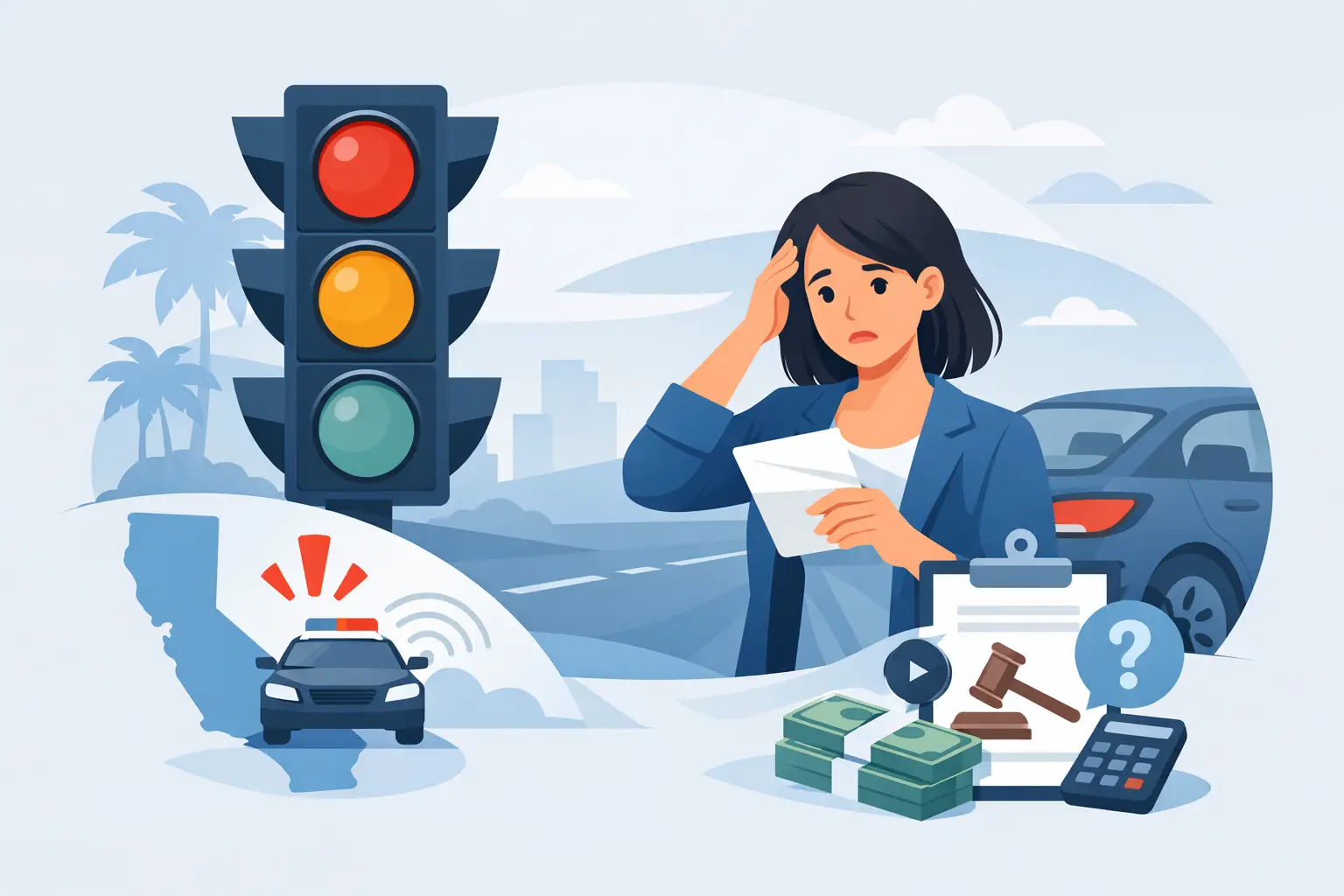
A red light ticket can feel straightforward: the notice says you entered on red, lists a fine, and gives you a court date or response deadline. But paying immediately can close off the chance to first inspect what the citation actually alleges, what evidence may support it, and whether the paperwork matches the event.
For California drivers, that review matters because red-light cases are not all the same. A citation issued by an officer at the scene raises different questions than an automated enforcement notice based on camera images and video. The right next step depends on the details, not the ticket’s intimidating format.
Start With the Deadline, Then Read Every Line
Do not set the ticket aside while you decide what to do. Find the appearance date, payment deadline, court location, case number, and instructions for responding. A missed deadline can create additional problems, including administrative consequences or a failure-to-appear issue. The exact process can vary by county and by the instructions on your citation or court notice.
Next, compare the document with what you remember. Check your name, license plate, vehicle description, location, date, time, and the code section cited. A typo alone does not automatically end a case, but accuracy still matters. Errors can point to a recordkeeping problem, a vehicle-identification question, or a reason to look more closely at the supporting materials.
If the ticket came in the mail, keep the entire packet. Camera-enforcement materials may include still images, a web-access code, a declaration, or language about how to view video. Preserve the envelope and any pages that identify when and how the notice was sent.
What a Red Light Ticket Must Be Based On
A red-light allegation is usually about timing and position. The central question is not simply whether a light was red at some point during the event. It is whether the available evidence supports the specific violation alleged under the cited law.
For an officer-issued citation, the officer’s observations may be central. That makes the written description, location, traffic pattern, visibility, and sequence of events worth examining. Was the officer positioned where the vehicle’s movement and the signal phase could be clearly observed? Were there obstructions, multiple lanes, a protected turn phase, heavy traffic, rain, glare, or unusual road geometry?
For a camera-based case, the evidence may include photographs, video, timestamps, and records connected to the intersection equipment. Look at what the images actually show. Can you identify the vehicle and plate? Is the vehicle shown before the limit line, in the intersection, or completing a turn? Does the material show the relevant signal indication and the sequence leading to the alleged entry?
A picture of a car in an intersection after the signal changes is not necessarily the same as proof that it entered after the signal turned red. The timing sequence matters. So does the location of the vehicle when the signal changed.
Review the Intersection, Signal, and Road Conditions
The physical setting can change how an event should be understood. Start with the intersection named on the ticket. Note the approach direction, number of lanes, designated turn lanes, lane markings, signs, and whether a right turn, left turn, or straight-through movement is alleged.
A right turn on red can involve different facts than driving straight through a solid red signal. For example, the question may include whether there was a posted prohibition, whether a required stop occurred, whether the turn was made from the correct lane, and what the evidence shows about cross traffic or pedestrians. Do not assume that a camera image alone answers all of those questions.
Signal timing can also be relevant. If an automated system is involved, the yellow-light interval, red-light activation timing, and equipment records may be worth identifying. That does not mean every timing concern creates a defense. It means the system context should be reviewed rather than treated as invisible background.
Weather and visibility deserve the same practical attention. Nighttime glare, sun angle, rain, fog, road spray, a blocked signal head, construction, or confusing lane changes may affect what an officer could see and how a driver perceived the intersection. Write down your recollection promptly. Details such as the lane you occupied, nearby vehicles, traffic congestion, and whether you had already crossed the limit line can fade quickly.
Gather Records Before Your Memory Gets Blurry
Preserving information is more useful than trying to reconstruct it weeks later. Save a clear photo or scan of the front and back of the citation, the notice, and any court paperwork. Keep copies of camera images, video-viewing instructions, and correspondence. If a website allows you to view evidence, record the date you viewed it and save any materials that are available to download.
If it is safe and lawful to do so, revisit the intersection at a similar time of day. Take photographs of signal placement, lane markings, signs, sight lines, and any features that may help explain the event. Do not attempt to recreate unsafe driving behavior or interfere with traffic. The goal is documentation, not a roadside experiment.
It can also help to create a short timeline in your own words. Include where you were coming from, your intended movement, the signal color you recall, when you crossed the limit line, and anything unusual about road or traffic conditions. Keep it factual. A clear account is more useful than a long argument built on guesses.
Evidence Questions Worth Asking
When reviewing a California red light ticket, focus on questions that can be tied to documents or observable facts:
- Does the citation identify the correct vehicle, location, date, time, and alleged movement?
- Do the photos or video show when the vehicle crossed the limit line in relation to the red signal?
- Is the signal phase visible and understandable from the available evidence?
- Are there roadway, weather, visibility, lane-marking, or traffic conditions that affect the account?
- Does the paperwork provide consistent case, court, and appearance information?
- If automated enforcement is involved, what records explain the camera system and timing sequence?
These questions do not promise a dismissal. They help separate a ticket that appears well-supported from one that may deserve a closer procedural or evidentiary review.
Decide Before You Pay
Paying a traffic citation is often treated as resolving it, and it may carry consequences beyond the immediate fine. Depending on the allegation and your record, a conviction can affect insurance costs, driving-record points, eligibility for traffic school, or work that depends on driving. Rideshare and delivery drivers may have additional practical concerns tied to account screening or vehicle-related work requirements.
That is why the decision should not be based only on the amount printed on the notice. Consider the deadline, the evidence available, the strength of your recollection, the time required to address the case, and the potential cost of a conviction. For some drivers, payment or an available court option may be the practical choice. For others, the factual or paperwork issues may justify preparing to challenge the citation or seeking legal advice from a qualified California attorney.
JusticeDrive can provide a free initial, document-based review of a California traffic ticket before you pay. The review can flag possible evidence gaps, officer-procedure signals, measurement or camera context, road and weather factors, and court-paperwork issues. It is not a law firm, does not provide legal representation, and cannot guarantee dismissal, a reduced fine, or any court outcome.
Prepare for the Path You Choose
If you plan to respond in court, follow the instructions and deadlines printed on your documents. Keep organized copies of your citation, evidence, notes, photographs, and correspondence. A court-ready packet can make it easier to present the relevant facts in an orderly way, but organization is not a substitute for understanding the rules that apply to your case.
If the ticket involves a complex record issue, commercial driving consequences, immigration concerns, a collision, injury, or a court date you cannot manage, consider speaking with a licensed California attorney. A non-law-firm preparation service can help you understand documents and organize materials, but it cannot act as your lawyer or appear on your behalf.
The most useful move is usually the least dramatic one: pause before paying, protect the deadline, and make the ticket prove what it says. A careful review gives you a clearer basis for whatever decision comes next.